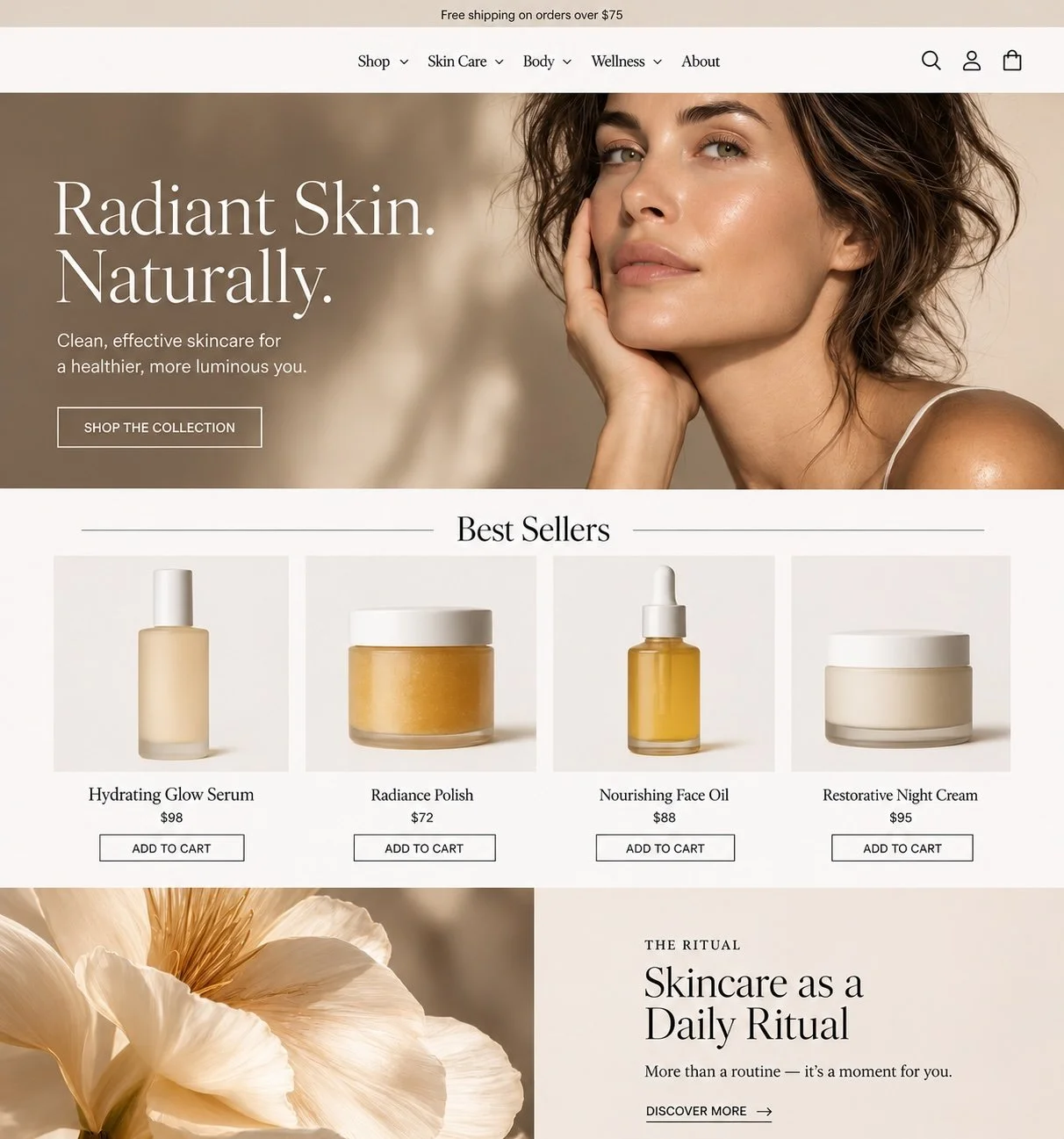
In beauty, customers aren’t simply purchasing a product. They’re deciding whether to trust the brand behind it.
Beauty is a highly competitive category, and independent brands face a particular challenge: establishing credibility before customers have had the opportunity to experience their products. Packaging, photography, and branding contribute to that first impression. But the website often determines whether someone feels comfortable moving from curiosity to purchase. A beautiful website can introduce a brand. A credible website gives customers the information they need to make an informed decision.
Here are seven common issues beauty founders should evaluate.
1. Product Claims Without Sufficient Explanation
Beauty customers encounter claims about hydration, brightening, smoothing, and other product benefits constantly.The problem arises when those claims appear without enough context.
Rather than relying exclusively on phrases such as “transformative results” or “revolutionary formula,” explain what the product is designed to do, which ingredients contribute to its intended benefits, and what customers can reasonably expect. Claims should be accurate, appropriately supported, and consistent with applicable advertising and product regulations. Clear explanations can communicate confidence more effectively than exaggerated promises.
2. Ingredient Information That Is Difficult to Find
Customers increasingly evaluate products based on their ingredients, personal preferences, and individual sensitivities.
If ingredient information is hidden, incomplete, or difficult to read, shoppers may hesitate. A product page should make the full ingredient list accessible and distinguish between marketing highlights and complete product information. Where appropriate, explain why particular ingredients were selected without suggesting that every ingredient guarantees a specific result. Transparency is part of the brand experience.
3. Beautiful Packaging With Weak Product Photography
Packaging photography can establish a compelling visual identity. However, customers also benefit from images showing the product itself.
For skincare, this might include texture and consistency. For makeup, it may involve shade representation, finish, and application. Images should accurately reflect the product and avoid creating unrealistic expectations. A combination of editorial photography and practical product images generally provides a more complete shopping experience.
4. Unclear Product Differences
Beauty brands frequently offer multiple products within the same category. If the distinctions aren’t obvious, customers may struggle to decide which product is right for them. Consider a brand selling three moisturizers. The website should explain how they differ in texture, intended use, formulation, or suitability rather than relying solely on creative product names. Comparison charts, concise descriptions, and clearly organized product categories can help customers make decisions.
5. Missing Shipping, Returns, and Customer Service Information
A customer considering an unfamiliar beauty brand may want reassurance about delivery times, returns, damaged products, and customer support. These details should be easy to locate. Policies should be written clearly and reflect what the company can actually provide. An attractive checkout page cannot compensate for uncertainty about what happens after a purchase.
6. Inconsistent Branding Across the Website
A sophisticated homepage followed by poorly formatted product descriptions, inconsistent typography, or unfinished pages can undermine the overall impression. Consistency doesn’t require every page to look identical. It means the visual language, tone, product information, and navigation should feel as though they belong to the same brand. This is especially important for beauty businesses positioning themselves in premium categories.
7. A Mobile Experience That Feels Like an Afterthought
Many customers discover beauty brands through social media, making the mobile website an important part of the purchasing journey. Small buttons, intrusive pop-ups, difficult product selectors, and slow-loading pages can create unnecessary frustration. Founders should regularly review their websites on different mobile devices and test the entire purchasing process. The experience should be as considered as the product packaging.
What Beauty Founders Should Consider Doing First
Before commissioning a full redesign, review the website through three questions.
Does the website explain the product clearly?
Customers should understand what they’re considering, how to use it, and what makes it different.
Does the experience communicate credibility?
Claims, imagery, policies, and product information should feel consistent and trustworthy.
Can customers purchase without unnecessary friction?
Navigation, product selection, and checkout should be straightforward.
The answers may reveal opportunities for improvement that don’t require replacing the entire website.
For independent beauty founders, credibility is built through details.
The most effective website doesn’t simply look beautiful. It makes customers feel informed, comfortable, and confident in their decisions.