For women balancing business goals, personal growth, and everyday responsibilities, Get Zen AF offers a different approach to planning—one that considers energy and well-being alongside achievement.
A certain kind of exhaustion comes from managing a life that looks perfectly organized on paper. Meetings are scheduled, deadlines are accounted for, and the to-do list is constantly updated. Yet somewhere between professional commitments and personal responsibilities, the person responsible for managing everything can become an afterthought.
For entrepreneurs and ambitious women, this contradiction is familiar. We invest considerable effort in organizing our businesses, careers, and households, often without giving the same attention to the conditions that let us function well in the first place.
The Zen AF Wellness Planner approaches that contradiction from a different direction. Rather than treating personal well-being as another obligation to squeeze into an already crowded schedule, it incorporates reflection, habit development, and intentional goal-setting into the planning process itself.
Created by Julia Garcia Devenishek, a master certified mindset coach and founder of Get Zen AF, the planner reflects her experience navigating entrepreneurship, motherhood, and personal development. What began as a system she developed for herself eventually became a structured product designed for other women managing multiple priorities.
A Different Relationship With Productivity
Traditional planners tend to measure success through completed tasks, appointments, and milestones. They can help organize responsibilities, but they rarely account for the circumstances around them.
A founder might have an exceptionally productive week while feeling physically exhausted. Another might accomplish fewer measurable tasks but make an important decision that improves her business's direction. Both experiences matter, although conventional productivity systems don’t always provide room to distinguish between them.
The Zen AF Wellness Planner attempts to introduce that missing context.
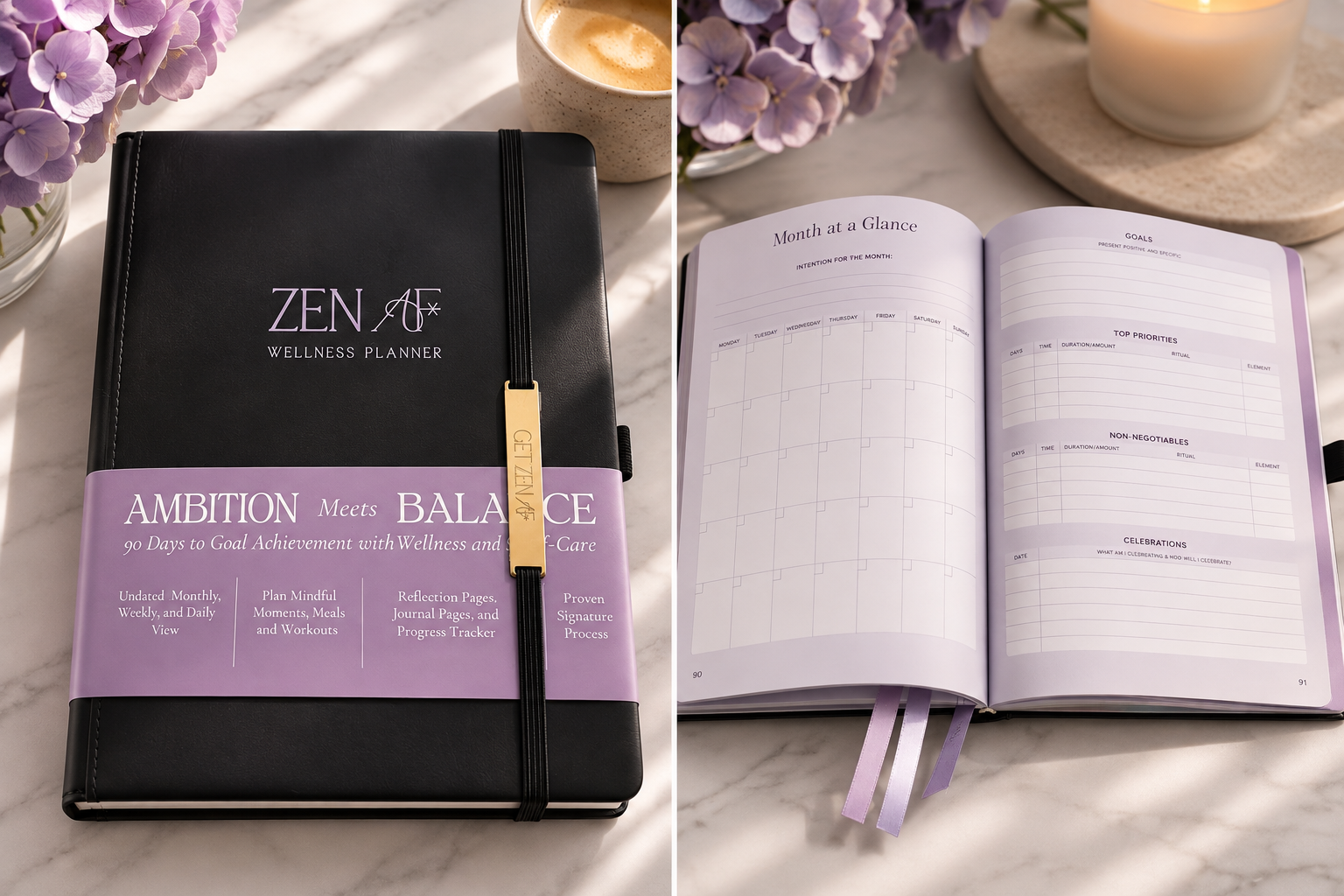
Its planning framework encourages users to establish goals within a defined period rather than continually working toward an undefined future. Monthly, weekly, and daily layouts provide the familiar structure of a traditional planner, while reflection exercises and wellness tracking create opportunities to consider how those goals fit into everyday life.
The undated format is another practical distinction. Users can begin whenever they choose, without waiting for January or feeling obligated to fill in weeks they missed.
This flexibility matters especially for entrepreneurs, whose schedules rarely follow a predictable pattern. Product launches, client demands, personal obligations, and unexpected opportunities can all change a week's course. A planning system that allows for adjustment may be more realistic than one built around uninterrupted consistency.
Why Wellness Belongs in the Planning Process
One of the planner’s most interesting design decisions is including wellness-related tools alongside conventional scheduling features.
The planner incorporates mood and water tracking, meal planning, mindfulness practices, and menstrual cycle tracking into the broader planning framework. Guided journaling and weekly evaluations also encourage users to consider patterns in their behavior, energy, and priorities.
These features do not replace professional healthcare or guarantee improved well-being. Their value lies in creating a consistent place to record information that might otherwise be overlooked.
For a business owner, understanding the relationship between personal routines and professional demands can be useful. A week full of meetings may leave little time for focused creative work. A recurring commitment may be consuming more energy than anticipated. A particular routine may be difficult to maintain because it was never realistic in the first place.
Writing these observations down can make them easier to recognize.
There is also something worth considering about the distinction between discipline and sustainability. Entrepreneurs are frequently encouraged to develop stronger habits, become more efficient, and maintain momentum. Fewer people consider whether those expectations fit the lives they are actually living.
A planner cannot resolve that tension on its own, but it can provide a more thoughtful framework for examining it.
The Design Is Part of the Experience
The physical presentation of the Zen AF Wellness Planner reflects the brand’s interest in making personal development feel considered, not clinical.
The planner features a vegan leather exterior, reinforced stitched binding, recycled paper, holographic edges, and three ribbon bookmarks to navigate the monthly, weekly, and daily sections. An elastic closure, pen holder, and interior pocket add practical details.
The planner is substantial, weighing approximately 2.2 pounds, which makes it better suited to someone who appreciates a full-size planning system than someone looking for a lightweight notebook to carry in a small handbag.
The design intentionally contrasts its structured interior with its expressive exterior. The design suggests organization doesn't have to be purely utilitarian. An everyday object can also reflect personal taste.
That distinction matters in a category where planners often fall into one of two extremes: highly functional office supplies or attractive stationery with limited practical structure.
Get Zen AF is attempting to occupy the space between the two.
A Planning System That Extends Beyond the Page
The planner also includes access to a digital companion through the Get Zen AF app, where users can explore additional resources and connect with a community of women interested in personal growth.
This combination of physical planning and digital support reflects a broader understanding of how habits develop. Writing down a goal is relatively straightforward. Revisiting it, evaluating progress, and making adjustments over time require more sustained attention.
The planner’s seven-part introductory journey, 90-day framework, and weekly reflection pages support that process.
For someone who already has an effective digital calendar or project management system, the Zen AF Wellness Planner may work best as a complementary tool rather than a replacement. Business operations, appointments, and collaborative tasks can stay in existing software, while the planner provides a more personal space to think through priorities and routines.
That separation could be especially appealing to founders who spend much of their workday looking at screens.
What Makes It Worth Considering?
At $53, with optional personalization for an additional $10, the Zen AF Wellness Planner costs more than a basic notebook. Its appeal largely depends on whether the buyer intends to use its reflection and wellness features, not just its calendar pages.
Someone looking for a minimalist appointment book may find the system more involved than necessary. Similarly, users who prefer fully digital planning may not want to add another physical tool to their routines.
For women who enjoy writing by hand, regularly revisit personal goals, and want a structured place to connect professional ambitions with daily well-being, the concept is more compelling.
The most interesting aspect of the Zen AF Wellness Planner, however, is not any individual feature. It is the assumption underlying the product: that personal well-being deserves a place within the structure of an ambitious life, rather than being addressed only after everything else is finished.
For women building businesses, developing careers, or navigating several responsibilities at once, that is a worthwhile idea.
Productivity will always have a place in entrepreneurship. The more relevant question may be whether the systems we use to organize our lives are helping us build something we actually want to sustain.
Product details: The Zen AF Wellness Planner is available through Get Zen AF, starting at $53.