From Concept to Grand Opening: The Turnkey Approach to Restaurant Construction
The Critical Role of a Fryer and Hood System in Your Kitchen
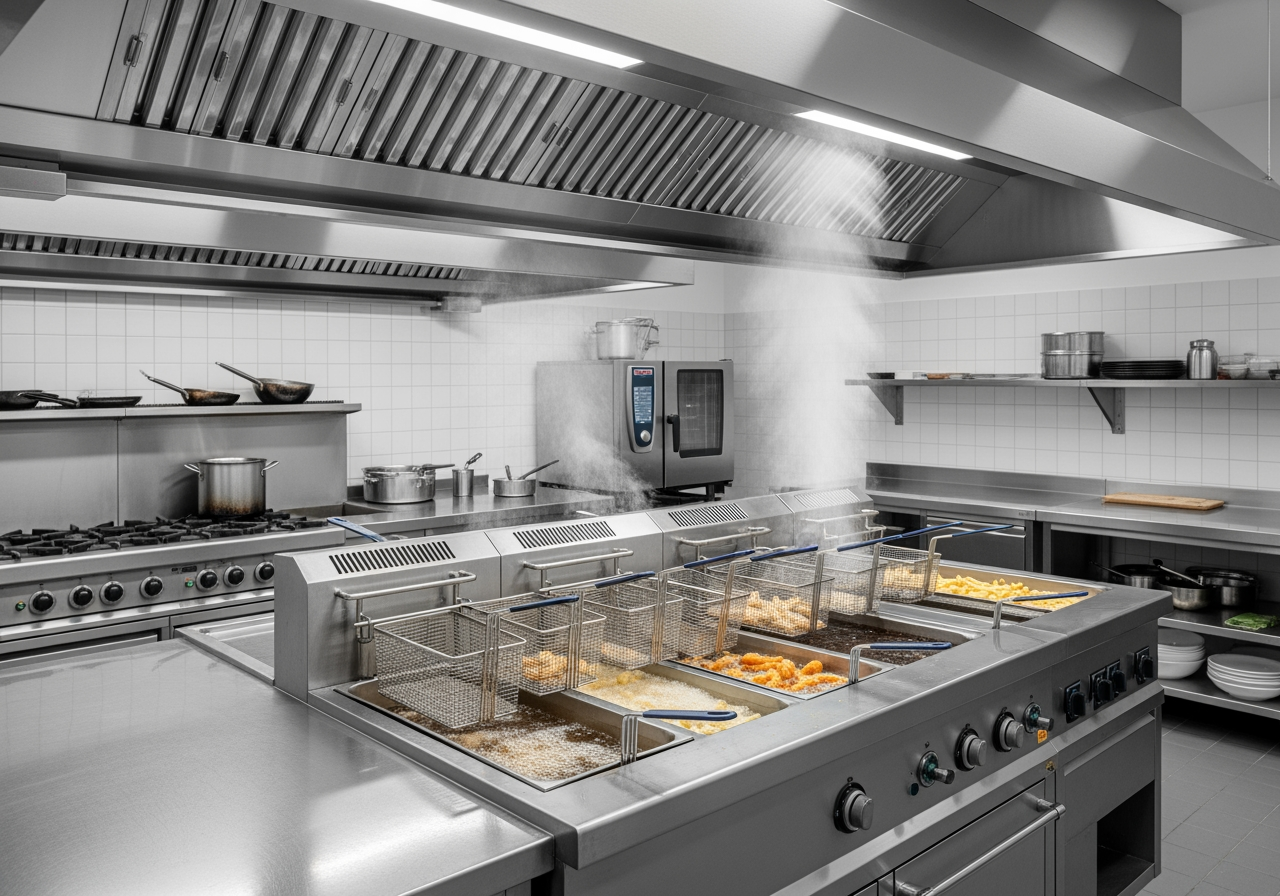 For many commercial kitchens, deep frying is an indispensable part of the menu. From crispy fries to golden-brown chicken, a high-quality deep fryer delivers the delicious results customers love. But behind every efficient frying station lies another critical component: the commercial kitchen hood.
We understand that selecting the right deep fryer and ensuring proper ventilation can be overwhelming. It’s not just about cooking; it’s about safety, compliance with local regulations, and maintaining a comfortable kitchen environment. A complete system, integrating a high-performance fryer with a proper ventilation hood, is non-negotiable for any serious food service operation.
In this comprehensive guide, we will cover everything you need to know about setting up the ideal frying station. We will delve into the essential components of a commercial deep fryer system, examine the various types of fryers available (gas, electric, countertop, and floor models), and discuss the crucial role of ventilation. We will also compare traditional hooded systems with modern ventless alternatives, highlighting key features to consider when purchasing, detailing maintenance requirements, and covering the essential regulatory and safety standards your system must meet.
Our goal is to equip you with the knowledge needed to make an informed decision, ensuring your kitchen operates efficiently and safely, delivering outstanding fried foods every time.
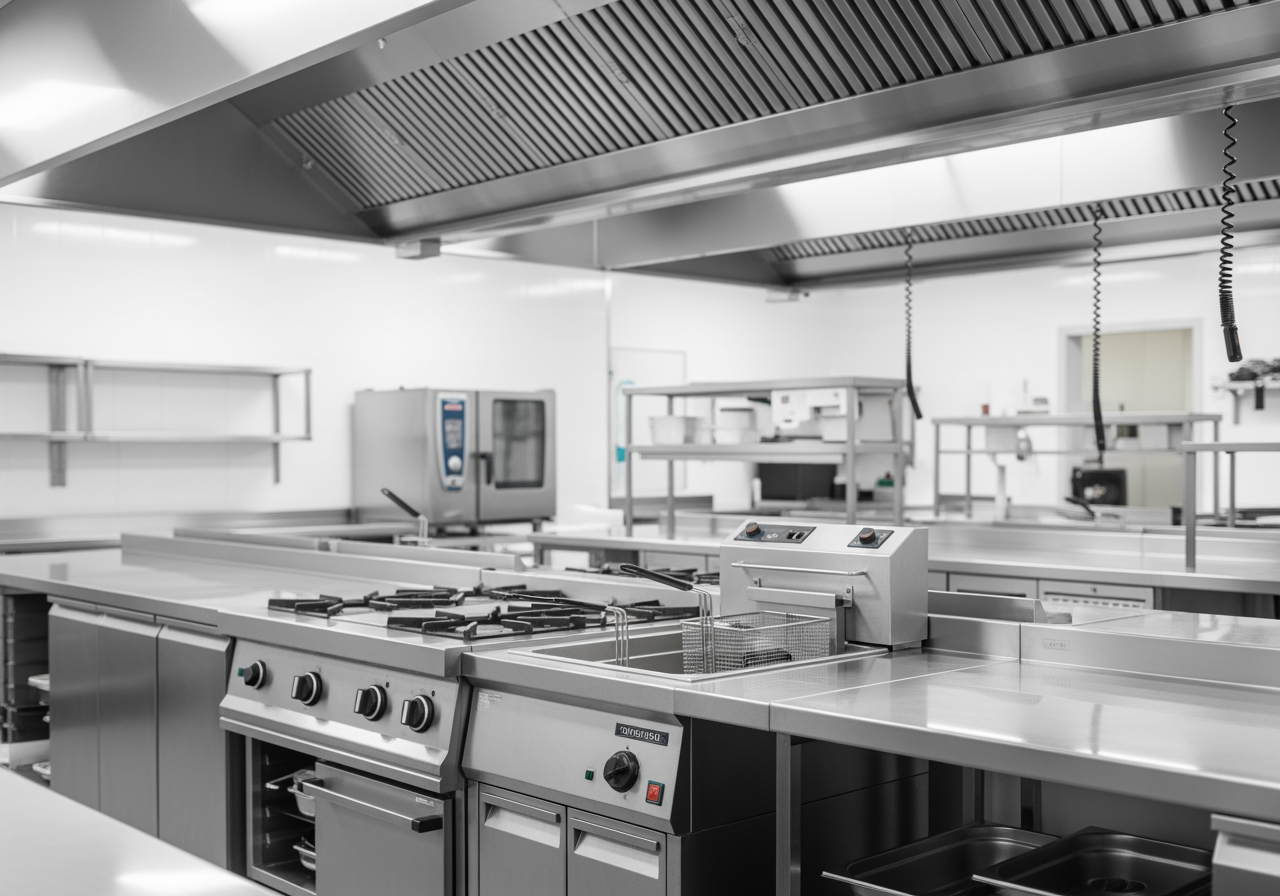
Commercial fryers are essential for any restaurant kitchen, making deep-frying a straightforward and efficient process. They are the workhorses behind countless popular menu items, from crispy appetizers to perfectly golden main courses. However, the performance of a deep fryer is inextricably linked to its ventilation system. A complete system, integrating a high-performance fryer with a proper ventilation hood, is non-negotiable for safety, compliance, and food quality. Without adequate ventilation, a deep fryer can become a source of grease accumulation, smoke, heat, and even fire hazards, compromising both the kitchen environment and the well-being of staff and customers.
The combination of a deep fryer and its hood system effectively removes grease-laden vapors, smoke, and excess heat from the cooking area. This not only keeps the kitchen air clean and comfortable but also prevents the buildup of flammable residues on surfaces, significantly reducing fire risks. Moreover, proper ventilation is a cornerstone of regulatory compliance, with stringent codes governing air quality and fire safety in commercial kitchens. Understanding the intricate relationship between these components is the first step toward designing a safe, efficient, and productive culinary space.
Essential Components of a Commercial Deep Fryer and Hood System
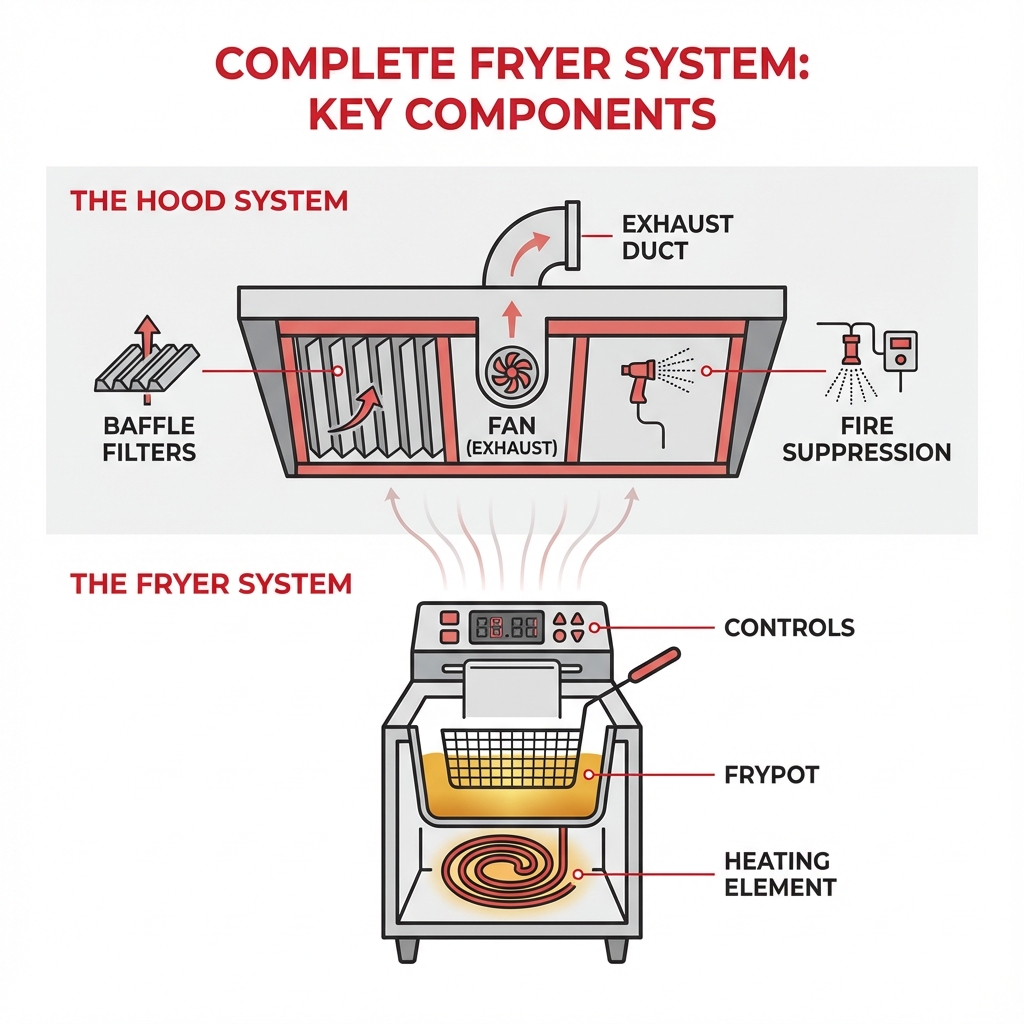
To truly understand the "commercial deep fryer with hood" system, we must break it down into its core components. Each part plays a vital role in the overall functionality, safety, and efficiency of your frying operation.
The Fryer Itself
The deep fryer unit is where the magic happens. It's designed to heat large quantities of cooking oil to precise temperatures, allowing for rapid and consistent cooking.
- Frypot (Tank): This is the vessel that holds the cooking oil. Typically constructed from durable stainless steel, frypots are designed to withstand high temperatures and resist corrosion. Their capacity varies greatly, ranging from smaller countertop units to large floor models that hold 100 pounds or more of oil.
- Heating Elements (Gas Burners or Electric Coils): These provide the heat necessary to bring the oil to temperature and maintain it during cooking. Gas fryers use powerful burners, while electric fryers rely on immersion heating elements.
- Thermostat & Controls: Essential for precise temperature management. Modern fryers often feature digital controls, programmable settings, and even automatic basket lifts for consistent results and ease of use.
- Fry Baskets: These hold the food during frying, allowing for easy immersion and retrieval. They come in various sizes and configurations to accommodate different food items.
- Cold Zone Design: Many fryers incorporate a "cold zone" at the bottom of the frypot, below the heating elements. This cooler area collects food particles and sediment, preventing them from burning and extending the life of the cooking oil.
- Drain Valve: A crucial feature for safe and efficient oil disposal and cleaning. Larger fryers often incorporate built-in filtration systems that are accessible via the drain valve.
The Commercial Kitchen Hood
The hood system is the protective canopy above your fryer, designed to capture and exhaust grease-laden vapors, smoke, heat, and odors. It's a critical component for both air quality and fire safety.
- Ventilation Hood: The physical structure positioned above the fryer. These come in various designs, including canopy, backshelf, and eyebrow types, which are chosen based on the kitchen layout and specific needs.
- Baffle Filters: These metallic filters are strategically placed within the hood to trap grease particles as the air rises. They are designed for easy removal and cleaning.
- Exhaust Fan: A powerful motor and fan assembly, typically located on the roof or an exterior wall, that pulls air through the hood, filters, and ductwork, expelling it outside.
- Make-Up Air System: As air is exhausted from the kitchen, an equal volume of fresh, conditioned air must be introduced to maintain proper pressure and prevent negative pressure issues. The make-up air system supplies this.
- Integrated Fire Suppression System (e.g., ANSUL): An absolute necessity for any commercial cooking appliance that produces grease-laden vapors, such as profound fryers. These systems, such as the ANSUL R-102 system, are designed to automatically detect and suppress fires, typically using a wet chemical agent, and are often integrated directly into the hood.
Together, these components form a comprehensive system that ensures your frying operations are not only productive but also meet the highest standards of safety and hygiene. For a broader look at how to integrate these elements into a cohesive operation, exploring restaurant construction & design-build resources can provide valuable insights into creating an optimized workflow.
Decoding the Different Types of Commercial Deep Fryers
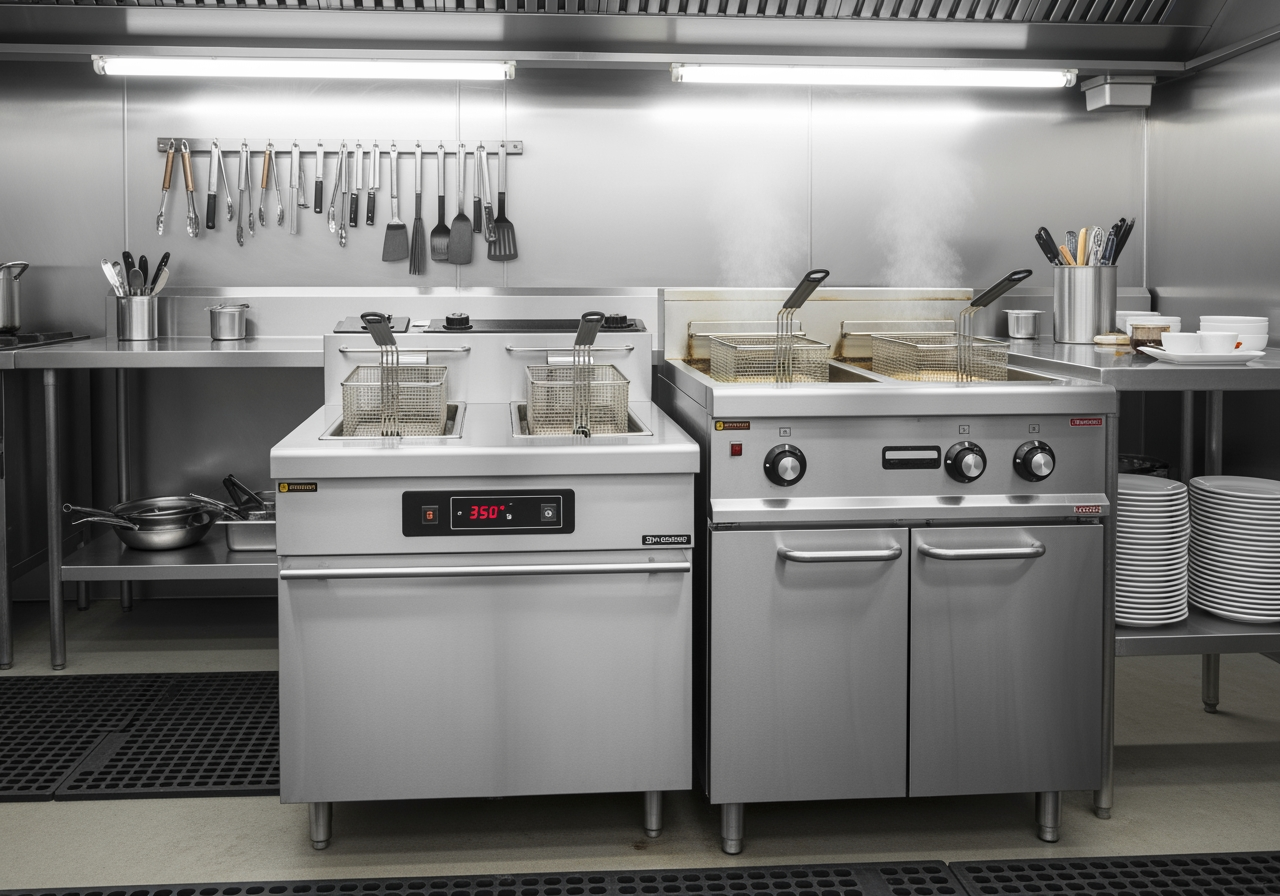
Choosing the right fryer type depends heavily on your menu, anticipated volume, and kitchen layout. The primary differentiators typically revolve around the power source and the physical size and capacity of the unit. Understanding these distinctions is crucial for making an informed investment that aligns with your operational needs.
Gas vs. Electric Fryers
The choice between gas and electric fryers is one of the most fundamental decisions you'll make, impacting everything from energy costs to heat recovery times.
- Gas Fryers: High BTUs: Gas fryers are recognized for their powerful burners, measured in British Thermal Units (BTUs), which enable rapid heating and quick temperature recovery.
- Faster Heat-Up Times: They typically heat oil more quickly than electric models, making them ideal for busy kitchens that need to reach temperature quickly at the start of service or recover rapidly between batches.
- Ideal for High-Volume Kitchens: Their ability to maintain consistent oil temperatures under heavy loads makes them a favorite in high-volume environments where continuous frying is a daily occurrence. We offer a wide range of gas fryers designed to meet the demands of any busy restaurant.
- Fuel Types: Available in natural gas (NG) or liquid propane (LP) configurations.
- Electric Fryers: Excellent Temperature Recovery: While they may heat up slightly slower than gas models, electric fryers often boast superior temperature recovery, which means the oil quickly returns to the desired frying temperature after food is added. This consistency can be crucial for food quality.
- Potentially More Energy-Efficient: Modern electric fryers, especially those with advanced controls and insulation, can be very energy-efficient, converting a higher percentage of energy directly into heat for the oil.
- Simpler Installation: Electric fryers generally have simpler installation requirements, as they don't necessitate gas lines or extensive ventilation ductwork in the same way gas fryers do (though a hood is still required for traditional models). For example, a reliable unit like the Dukers Commercial Deep Fryer provides robust performance for various operations.
- Precise Control: Electric elements often allow for exact temperature control, which can be beneficial for delicate items.
Floor vs. Countertop Models
Beyond the power source, the physical form factor of your fryer is another critical consideration, dictated by available space and required capacity.
- Floor Models:High Oil Capacity: These are the workhorses of high-volume kitchens, typically holding anywhere from 40 to over 100 pounds of oil.
- Designed for High Output: Built for continuous, heavy-duty use, floor models can handle large batches of food, making them indispensable for restaurants with extensive fried menus.
- Often Have Built-in Filtration: Many larger floor models come with integrated oil filtration systems, which significantly extend oil life and reduce labor costs associated with manual filtering.
- Cabinet Base for Storage: The base often includes a cabinet for storing extra oil, filtering equipment, or other supplies, optimizing kitchen workflow.
- Countertop Models:Smaller Footprint: Ideal for kitchens with limited floor space or those that only require occasional frying. They sit directly on a counter or equipment stand.
- Lower Oil Capacity: Typically holds between 10 and 30 pounds of oil, making it suitable for smaller operations or specific menu items that don't require high-volume frying.
- Perfect for Smaller Kitchens or Specific Menu Items: A compact yet powerful option, such as the NAKS 30 lb UL Listed Commercial Countertop Deep Fryer, can be an excellent choice for a dedicated frying station for a particular dish or for smaller cafes and food trucks.
- Flexibility: Easily moved or relocated if the kitchen needs to change, offering greater versatility.
The decision between these types will shape your kitchen's efficiency, capacity, and overall operational flow. Careful consideration of your menu and anticipated demand is paramount.
The Ventilation Verdict: Traditional Hoods vs. Ventless Systems
The most significant decision after selecting the fryer itself is determining the ventilation strategy. Traditional hoods have long been the industry standard, but ventless technology offers a compelling alternative for specific situations, particularly where conventional ductwork is impractical or impossible. Ventless fryers feature a top-of-the-line filtration system that eliminates the need for hood ventilation, presenting a unique set of advantages and disadvantages.
Let's break down the key differences between these two approaches:
Feature Traditional Hooded System Ventless Fryer System Initial Cost High ($5,000 - $20,000+ for hood, ductwork, installation, make-up air) Moderate to High (fryer is more expensive, but no hood cost) Installation Complex (Requires professional design, ductwork, roof penetration, make-up air unit, fire suppression integration) Simple (Plug-and-play, no ductwork, self-contained filtration and fire suppression) Location Fixed, must be directly under the hood and connected to external exhaust Flexible (Can be placed almost anywhere with appropriate electrical/gas hookup) Maintenance Regular hood and duct cleaning (baffle filters daily/weekly, ductwork professional cleaning monthly/quarterly) Regular internal filter replacement (HEPA, carbon, grease filters), fire suppression system checks Performance Superior removal of heat, smoke, and all grease-laden vapors. Provides comprehensive kitchen ventilation. Effective for grease/odor removal, but less effective at removing ambient heat from the cooking process. Compliance Meets all local fire and health codes when properly installed and maintained (NFPA 96 standards) Must be UL710B/Type-1 compliant and certified by local authorities to be code-compliant in specific applications Operational Costs Energy for exhaust fan and make-up air, professional cleaning, potential higher utility bills Energy for fryer and internal fan, filter replacement costs, potential for lower utility bills due to no conditioned air loss Noise Level Can be significant from exhaust fan Generally quieter. Still, internal fans produce some noise Traditional Hooded Systems are the robust, all-encompassing solution for most commercial kitchens. They are designed to handle high volumes of heat, smoke, and grease from multiple cooking appliances, not just fryers. The upfront cost is substantial, often ranging from $5,000 to $20,000 or more, including the hood, ductwork, exhaust fan, make-up air unit, and professional installation. However, they offer superior overall ventilation, effectively clearing the entire cooking area of airborne contaminants and heat. Maintenance involves regular cleaning of baffle filters and periodic professional cleaning of the ductwork to prevent grease buildup, which is a significant fire hazard.
Ventless Fryer Systems, on the other hand, represent a technological leap, offering immense flexibility. These fryers integrate their own multi-stage filtration (grease, HEPA, activated carbon) and fire suppression systems directly into the unit. This eliminates the need for traditional overhead hoods and external ductwork, leading to substantial cost savings as a conventional hood and vent system can cost between $5,000 and $20,000! They are particularly beneficial for kitchens short on space, food trucks, concession stands, kiosks, or locations where traditional ventilation is impractical, restricted, or too expensive. Wells Ventless Fryers, for example, are certified Type-1 compliant and UL 710 B compliant recirculation hood systems. While they excel at removing grease and odors, it's important to note that they don't remove ambient heat from the kitchen as effectively as a traditional hood. Maintenance primarily involves replacing internal filters and checking the self-contained fire suppression system. The cost to run this system for a year will offset the initial cost of filters, but savings from not having a traditional hood are substantial.
The choice between a traditional hooded system and a ventless fryer hinges on your specific operational context, budget, and local building codes. While ventless options offer incredible flexibility and cost savings, traditional hoods remain the gold standard for comprehensive kitchen ventilation, especially in high-volume, multi-equipment environments.
Key Features to Consider When Purchasing a Commercial Deep Fryer
When investing in a commercial deep fryer, it is crucial to look beyond the initial price tag. The features you choose will profoundly impact its performance, durability, energy efficiency, ease of use, and ultimately, your kitchen's profitability and food quality. Your choice will affect everything from food quality to labor costs, making careful consideration essential.
Capacity, Power, and Performance
These are the fundamental metrics that dictate how effectively a fryer can meet your operational demands.
- Oil Capacity (lbs): This refers to the amount of oil the frypot can hold. It directly correlates with the volume of food that can be fried per batch. Small countertop units might hold 10-30 lbs, while large floor models can hold 50-100+ lbs. Match capacity to your peak demand and menu items.
- Production Rate (lbs/hour): This indicates the amount of fried product the fryer can produce in one hour. It's a critical factor for high-volume kitchens to ensure they can meet demand during busy periods.
- BTU (Gas) / Wattage (kW) (Electric): These metrics measure the heating power of the fryer. Higher BTUs or wattage generally mean faster heat-up times and quicker temperature recovery after food is added, which is vital for consistent frying and preventing soggy products. Commercial gas fryers provide consistent, high-capacity frying, making them ideal for busy kitchens.
- Temperature Range & Accuracy: A fryer should be able to maintain a consistent temperature within a precise range (typically 200°F to 400°F). Accurate temperature control is essential for proper cooking, preventing oil breakdown, and ensuring food safety.
- Recovery Time: The time it takes for the oil to return to its set temperature after a batch of cold food is introduced. Fast recovery times are a hallmark of efficient fryers, contributing significantly to crispy, perfectly cooked results.
Materials, Controls, and Ease of Use
These features contribute to the fryer's longevity, operational efficiency, and the quality of your fried products.
- Stainless Steel Construction: This is the industry standard for commercial kitchen equipment due to its durability, corrosion resistance, and ease of cleaning. Ensure that both the frypot and exterior panels are made of high-grade stainless steel.
- Cold Zone: As mentioned earlier, a well-designed cold zone at the bottom of the frypot collects food particles, preventing them from burning and contaminating the oil. This significantly extends oil life, saving on oil costs and improving food flavor.
- Drain Type: Easy and safe oil draining is paramount. Front drains are common, but some fryers integrate internal filtration systems that simplify the process.
- Controls (Manual vs. Digital/Programmable): Manual Controls: Simple and robust, often found on basic models.
- Digital Controls: Offer precise temperature settings, timers, and diagnostic capabilities.
- Programmable Controls: Allow you to pre-set cook times and temperatures for various menu items, ensuring consistency regardless of the operator. Some advanced models include features like Cook Time Sensitivity (CTS), which automatically adjusts cook times based on oil temperature drops, and a Dual Load Cook Cycle for simultaneous cooking of different products.
- Built-in Filtration Systems: A highly desirable feature, especially for floor models. These systems filter the oil directly within the fryer, extending oil life by days or even weeks, reducing labor, and improving food quality.
- Safety Features: Look for features such as automatic shut-off, high-limit thermostats, and interlocks that prevent operation if components are not correctly installed.
When outfitting your kitchen, selecting cooking equipment for restaurants requires a holistic approach, considering how each piece integrates into your overall workflow and contributes to both efficiency and the quality of your culinary output.
How Hoods Work and Which Type is Right for Your Fryer
A commercial hood is far more than just a metal box hanging above your cooking equipment; it's an engineered system designed to capture and exhaust hazardous, grease-laden vapors, smoke, and excess heat. This intricate process ensures a safe, comfortable, and compliant kitchen environment.
The Science of Kitchen Ventilation
The primary function of a commercial kitchen ventilation system is to remove contaminants and heat from the cooking area. This involves several key principles:
- Grease-Laden Vapor Capture: Deep frying generates significant amounts of grease vapor. The hood's design, particularly its overhang and capture velocity, is engineered to create an air curtain that effectively draws these vapors upwards and into the filtration system.
- Airflow (CFM): Measured in Cubic Feet per Minute (CFM), this quantifies the volume of air moved by the exhaust fan. The required CFM is calculated based on the size and type of cooking equipment, ensuring adequate capture and removal of contaminants. Fryers, being high-heat and high-grease appliances, typically require substantial airflow.
- Heat and Smoke Removal: Beyond grease, hoods efficiently remove intense heat and smoke generated by fryers, preventing the kitchen from becoming uncomfortably hot and smoky. This improves working conditions and reduces the load on the HVAC system.
- Make-Up Air Replacement: As the exhaust fan pulls air out of the kitchen, an equal volume of fresh, conditioned air must be introduced to maintain the kitchen's air quality. This "make-up air" prevents negative pressure within the kitchen, which can lead to drafts, inefficient exhaust, and even carbon monoxide buildup if gas appliances are present.
- NFPA 96 Standards: The National Fire Protection Association (NFPA) Standard 96, "Standard for Ventilation Control and Fire Protection of Commercial Cooking Operations," sets the benchmark for the design, installation, operation, inspection, and maintenance of commercial kitchen ventilation systems. Adherence to NFPA 96 is crucial for ensuring fire safety and meeting regulatory compliance requirements.
Advantages and Disadvantages of Different Hood Types
The type of hood you choose will depend on your kitchen's layout, ceiling height, and the specific equipment that needs to be ventilated. Here are the most common types suitable for commercial deep fryers:
- Type 1 Canopy Hoods: Advantages: These are the most common and versatile choice, designed to hang over the cooking equipment. They provide excellent capture and containment of grease-laden vapors, smoke, and heat due to their extensive collection area. Available in both wall-mounted (against a wall) and island (freestanding in the center of the kitchen) configurations, they can accommodate various kitchen layouts.
- Disadvantages: Require significant overhead space and extensive ductwork. It can be visually imposing in smaller kitchens. Installation and ongoing operational costs (for exhaust and make-up air) can be high.
- Backshelf Hoods: Advantages: Also known as low-profile or pass-over hoods, these hoods sit closer to the cooking surface, often integrated into a counter or equipment line. They are a good option for kitchens with lower ceiling heights or where a large canopy hood might obstruct workflow or views. They are generally more compact than canopy hoods.
- Disadvantages: May have lower capture efficiency compared to canopy hoods, especially for taller flames or intense heat, which may allow some vapors to escape into the kitchen. Not ideal for high-volume, high-grease appliances like deep fryers unless specifically designed for that purpose with powerful exhaust.
- Eyebrow Hoods:Advantages: These are typically smaller, more compact hoods designed to sit directly above specific pieces of equipment, often integrated into an equipment suite. They are suitable for targeted ventilation of smaller appliances.
- Disadvantages: Generally not suitable for high-volume deep fryers due to their limited capture area and lower CFM capacity. They are better suited for equipment like griddles or ovens that produce less grease-laden vapor and heat.
For a commercial deep fryer, especially a high-volume unit, a Type 1 canopy hood is almost always the recommended and often legally mandated choice due to its superior capture efficiency and ability to integrate robust fire suppression systems.
Maintenance, Costs, and Safety Regulations
A commercial deep fryer and its associated hood system represent a significant investment for any foodservice operation. Beyond the initial purchase, understanding its ongoing maintenance needs, total cost of ownership, and crucial legal requirements is paramount for a successful, safe, and compliant operation.
Maintenance for Peak Performance and Longevity
Proper maintenance is not just about extending the life of your equipment; it's about ensuring consistent food quality, operational efficiency, and, most importantly, fire safety.
- Daily Fryer Cleaning (Boil Out): A daily boil-out is crucial for removing carbonized food particles and grease buildup from the frypot. This involves draining the oil, filling the frypot with water and a specialized boil-out chemical, heating it, and then scrubbing the interior. This process prevents flavor transfer and maintains oil quality.
- Regular Oil Filtering: Filtering your cooking oil daily, or even multiple times a day, depending on usage, is critical. This removes food debris and sediment, extending the oil's lifespan, reducing oil costs, and ensuring consistently clean-tasting fried products. Many modern fryers have built-in filtration systems that simplify this task. For detailed guidance, learn how to clean a deep fryer effectively to maximize its performance and lifespan.
- Routine Hood Filter Cleaning: The baffle filters in your hood should be removed and cleaned daily or weekly, depending on the amount of grease they accumulate. Dirty filters reduce airflow and capture efficiency, and they become a fire hazard.
- Semi-Annual Fire Suppression System Inspection: The integrated fire suppression system (e.g., ANSUL R-102) must be inspected and certified by a qualified professional at least every six months, as mandated by NFPA 96. This ensures it's in proper working order in case of a fire.
- Professional Duct Cleaning Schedule: The exhaust ductwork accumulates grease over time, even with the use of efficient filters. This grease buildup is highly flammable. NFPA 96 requires professional cleaning of the entire exhaust system (ducts, fans) at intervals ranging from monthly to annually, depending on the volume and type of cooking. Fryers typically fall into a category requiring more frequent cleaning.
The Total Cost of Ownership
Evaluating the total cost of ownership extends beyond the sticker price and encompasses all expenses associated with acquiring, installing, operating, and maintaining the system throughout its lifespan.
- Initial Purchase Price (Fryer + Hood): This includes the cost of the deep fryer, ventilation hood, baffle filters, exhaust fan, make-up air unit, and fire suppression system. As noted, a traditional hood system can range from $5,000 to $ 20,000, in addition to the cost of the fryer. Ventless fryers, although more expensive as a unit, eliminate the need for a hood.
- Installation Costs: This can be substantial and includes labor for plumbing (for gas lines and water for cleaning), electrical wiring, gas line hookups, ductwork fabrication and installation, roof penetration, and the integration and certification of the fire suppression system. These costs can vary significantly depending on the complexity of the kitchen and local labor rates.
- Operating Costs:Energy: Gas or electricity consumption for the fryer, plus electricity for the exhaust fan and make-up air unit (which conditions the incoming air).
- Oil: The most considerable ongoing expense. Efficient fryers, cold zones, and filtration systems can help mitigate this.
- Maintenance & Repair Costs: This includes the cost of replacement filters (for both the hood and any built-in fryer filtration), boil-out chemicals, professional duct cleaning services, fire suppression system inspections and recharges, and potential repairs to components like heating elements, thermostats, or fan motors.
Navigating Critical Safety and Regulatory Standards
Compliance with safety and regulatory standards is not optional; it's a legal requirement that protects your business, employees, and customers.
- NSF (National Sanitation Foundation) Certification: NSF certification indicates that a piece of equipment meets strict public health and safety standards. Look for this feature on your fryer to ensure it's designed for easy cleaning and sanitation, which helps prevent foodborne illnesses.
- UL (Underwriters Laboratories) Listing: UL listing signifies that a product has been tested and meets specific safety standards. For electrical and gas fryers, UL listing confirms they are safe for commercial use. For ventless fryers, UL 710 B compliance is critical, indicating that the recirculation system meets fire and safety requirements.
- Local Health & Fire Department Codes: These are paramount. Your local authorities will have specific requirements for kitchen ventilation, fire suppression, and equipment installation. Always consult with your local fire marshal and health department during the planning and installation phases to ensure full compliance.
- Mandatory Integrated Fire Suppression: For any commercial deep fryer, an integrated fire suppression system (such as an ANSUL R-102 system) is legally mandated. This system is designed to automatically detect and extinguish grease fires, preventing catastrophic damage and protecting lives. It must be installed and maintained by certified professionals.
Ignoring these standards can result in substantial fines, operational shutdowns, increased insurance premiums, and, in the worst-case scenario, devastating fires. Prioritizing safety and compliance is an investment in the long-term viability of your restaurant.
Find the Perfect Fryer System for Your Kitchen
Choosing the right commercial deep fryer with a hood is a foundational decision for any foodservice business. It's a choice that impacts not only the efficiency and quality of your fried menu items but also the safety, comfort, and compliance of your entire kitchen operation. From the robust power of gas fryers to the precise control of electric models, and from the high capacity of floor units to the space-saving design of countertop options, the market offers a diverse range of solutions.
The critical decision between a traditional hooded system and an innovative ventless fryer hinges on your kitchen's unique constraints, budget, and operational philosophy. While ventless fryers offer unparalleled flexibility for non-traditional locations, a well-designed traditional hood remains the cornerstone of comprehensive kitchen ventilation for most high-volume establishments.
By balancing factors such as power, capacity, ventilation strategy, maintenance needs, and regulatory compliance, you can design a frying station that is safe, efficient, and capable of consistently producing delicious food for years to come. Careful planning and adherence to industry best practices are key to a successful implementation. For those starting on a new culinary venture or renovating an existing space, considering a comprehensive approach to restaurant construction & design-build can streamline the entire process, ensuring all equipment, including your fryer and hood system, is perfectly integrated.
Ready to upgrade your kitchen's frying capabilities? Discover our extensive collection of commercial fryers for restaurants, designed to find the perfect solution for your business.