How Automation Solutions Shape Customer Relationships

Key Takeaways
- AI-driven automation, especially chatbots, is rapidly transforming customer support with immediate, round-the-clock service.
- Personalized, automated marketing campaigns drive higher engagement and increase customer satisfaction.
- Automation and data analytics enable businesses to anticipate customer needs and provide personalized experiences.
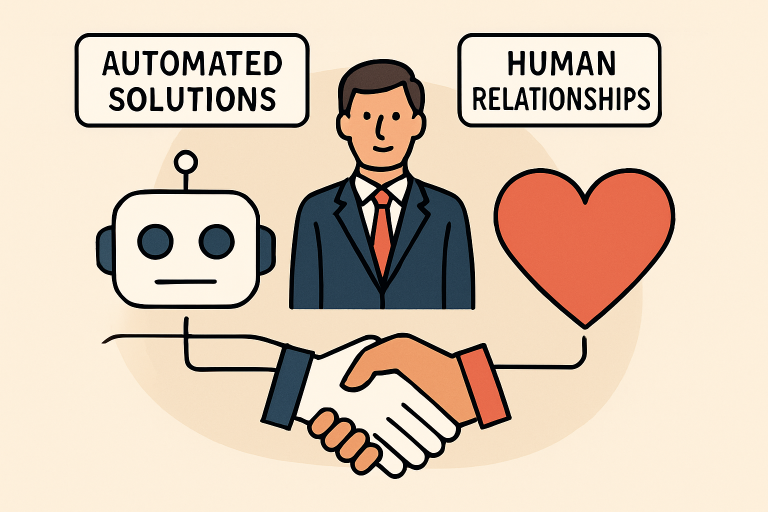
- Balanced integration of automation and human touch is crucial for fostering trust, empathy, and building relationships.
In today’s rapidly evolving digital landscape, automation technology is profoundly reshaping how businesses connect with their customers. From AI-powered chatbots that provide instant assistance to platforms that personalize every interaction, automation enables brands to streamline operations while fostering deeper, trust-based relationships. For example, a mobile coffee shop in San Francisco might use automated systems for online ordering and customer engagement, offering both efficiency and a personalized touch that keeps customers coming back.
Companies leverage advanced tools to resolve customer issues quickly, automate tasks, and deliver tailored marketing communication. These capabilities enhance customer experience and allow service teams to focus on meaningful conversations. As expectations for real-time, personalized service grow, automation ensures swift and consistent support, guiding decisions through data-driven insights. The challenge is blending automation with human empathy for genuine interactions.
A Harvard Business Review report states that companies adopting smart automation see increased loyalty, with customers expecting seamless digital experiences.
AI chatbots offer instant, 24/7 assistance, handling multiple queries simultaneously, thereby reducing wait times and enhancing customer service. Businesses using AI chatbots report a 36% rise in repeat purchases and over 50% faster issue resolution, building loyalty through responsiveness. Major brands like Bank of America and H&M utilize this technology to scale inquiries and enhance customer satisfaction.
Automation is transforming marketing by enabling the creation of hyper-personalized campaigns. By analyzing customer data, businesses can tailor messages, with 73% of shoppers saying AI recommendations improve their experience. Companies that utilize AI in customer care experience an 8% faster revenue growth, enhancing engagement and brand loyalty through targeted content.
Data-Driven Customer Insights
The real power of automation in relationship management lies in its ability to transform massive volumes of customer data into actionable insights. AI-enabled CRM systems continuously analyze interactions, behaviors, and feedback to spot emerging needs and trends. This insight allows companies to proactively engage customers—recommending new products, offering timely solutions, or anticipating concerns before they arise. By 2025, more than 80% of organizations are expected to utilize AI-powered CRM, forecasting a future where business interactions are increasingly tailored and predictive.
Balancing Automation with Human Interaction
While automation delivers speed and efficiency, maintaining human connection remains crucial for customer satisfaction and loyalty. Customers continue to seek empathy, creativity, and problem-solving from live agents, particularly for complex or sensitive issues. The most successful businesses deploy a hybrid approach—using AI and automation for routine tasks while reserving human resources for nuanced scenarios. This strategy reduces costs, accelerates resolution times, and ensures that empathy remains at the heart of customer relationships. Companies employing such hybrid models report a 25% rise in customer satisfaction and a 15% decrease in support costs as they optimize the balance between digital convenience and human care.
Implementing Automation Strategies
- Identify repetitive, time-consuming tasks within customer journeys that are suitable for automation, such as order tracking or appointment scheduling.
- Select automation tools and platforms that align with the organization’s industry, customer expectations, and long-term goals.
- Train employees to work alongside automated systems, empowering them to use new technology as a force multiplier rather than a replacement.
- Monitor, analyze, and continuously refine processes, using feedback and performance metrics to enhance automated workflows and customer experiences.
Challenges and Considerations
Despite its advantages, automation brings unique challenges that must be addressed to maintain customer trust. Data privacy, transparency of AI decision-making, and the risk of depersonalized interactions are chief among concerns. Companies must prioritize the ethical use of data, clearly communicate the role of automation, and ensure that customers can easily escalate issues to human agents when necessary. Establishing robust data privacy standards—especially in light of fast-moving regulations—protects both organizations and their customer bases.
Future Trends in Automation and Customer Relationships
Looking forward, automation will continue to reshape customer relationship management. Agentic AI, which anticipates needs and delivers proactive, tailored engagement, is emerging as a transformative trend. Automation in voice commerce, virtual reality, and omnichannel communication is expanding the reach of businesses and enabling seamless customer experiences across multiple platforms.
As these technologies evolve, the differentiator for future-ready organizations will be the ability to combine sophisticated automation with genuine, human-centric engagement. Businesses that thoughtfully integrate new capabilities while prioritizing empathy and transparency will be best positioned to build lasting, meaningful customer relationships in the years ahead.