“Deux Mains means ‘Two Hands’ in Creole” with Julie Colombino-Billingham
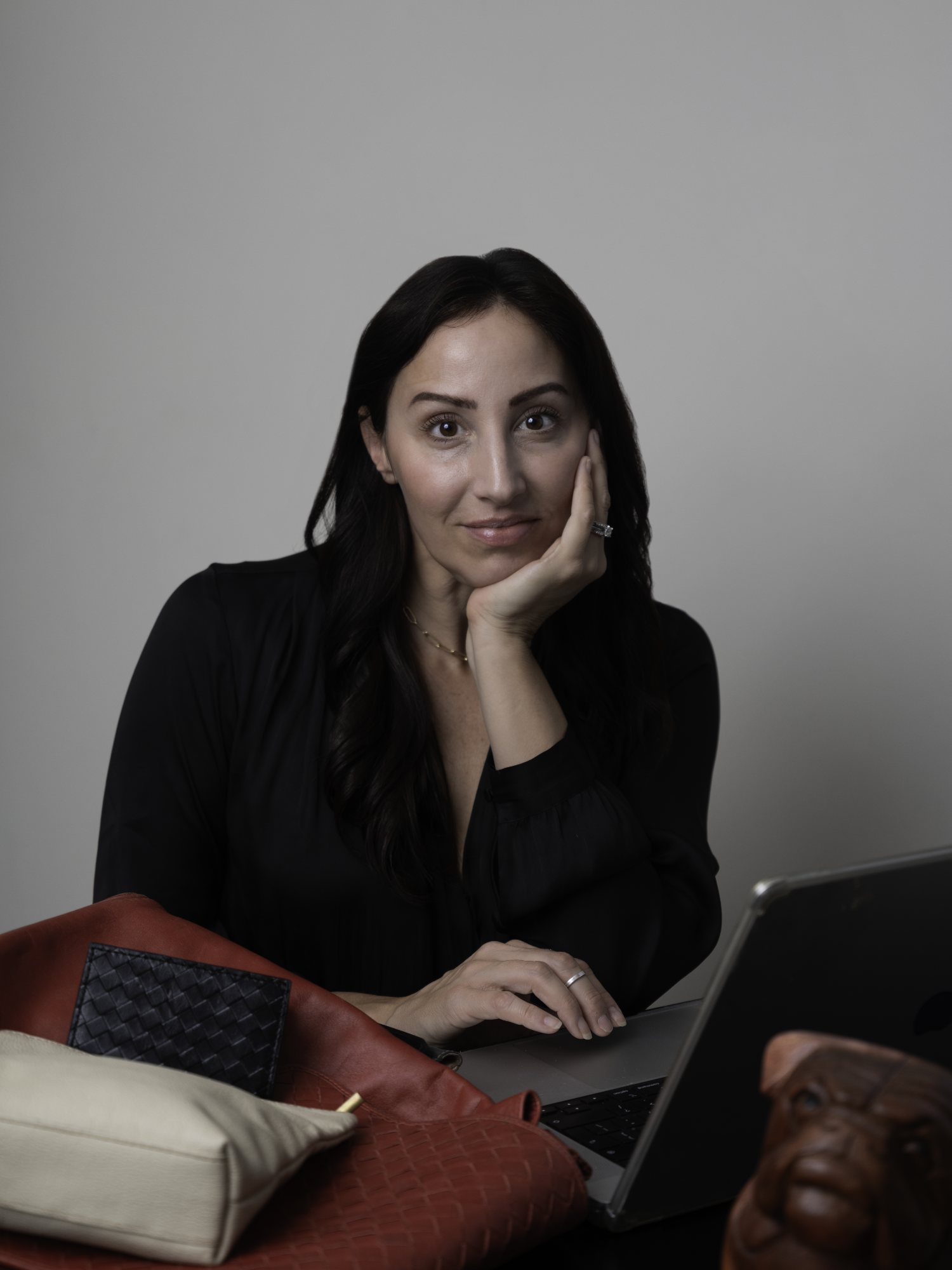
Julie Colombino-Billingham is a first-generation Italian American with a diverse background ranging from professional dancer and aerialist to MBA trained in international disaster. Her inspiration for fashion is rooted in the beauty and extremities of Haiti, where she learned her first lesson from the women she encountered there: "I don't need water, I need a job." In response, Julie created a different kind of fashion business focused on sustainable luxury goods that are better for both people and the planet.
Fueled by the strength of Haitian people, Deux Mains evolved into a job creation hub where artisans are valued, and each collection is intelligently designed, made, and manufactured in our solar-powered Port-au-Prince factory.
What inspired you to start your business, and what problem were you passionate about solving?
Deux Mains wasn’t born as a business idea, it began as a response to a moment that completely changed me. After the 2010 earthquake, I arrived in Haiti as a disaster responder thinking I was there to “help,” but very quickly, Haitians taught me what real support looks like. I was in a tent camp giving out bottles of water and tents when a woman told me plainly, “Mwen pa bezwen dlo, mwen vle travay.” “I don't want water, but I need a jobs.”
That sentence reframed everything.
What inspired me to start Deux Mains was seeing that people weren’t asking for charity. They wanted dignity, stability, and the chance to build their own futures. As a foreigner, I knew my role wasn’t to impose solutions, but to create a platform where Haitian talent could thrive on its own terms. I learned there was a leather crafting industry and talented Haitian craftspeople in need of formal employment and access to a marketplace.
I became passionate about one core problem:How do we create long-term, dignified, living-wage jobs that strengthen families and communities?
Deux Mains grew from that question. Today, our artisans produce beautiful and chic handbags for global distribution, most notably at Nordstroms, in our very own solar powered factory in Port-au Prince. We also produce high-quality leather school shoes that are worn by children across Haiti.
How did your early days as a founder look? Can you share one moment that tested your resilience?
The early days were messy, exhausting, and full of trial and error. There was no fancy business plan, no startup accelerator, no clean roadmap. I was learning Creole, navigating a new culture, and trying to build a sustainable business in a country that outsiders often underestimate, but that I knew was full of potential.
One of my hardest moments came early on. A major order fell through at the last minute, and I had a team of artisans depending on me. I remember standing in the factory after everyone left for the day, staring at a pile of raw materials we could no longer afford to use. I felt like I had failed them, and myself.
But the next morning, those same artisans showed up with ideas, not frustration. They offered new designs, new ways to use scraps, new products we could try. Their resilience gave me mine. That day taught me something I carried with me forever:
Leadership isn’t about having all the answers. It’s about walking forward with people who believe in the work as much as you do.
Haiti taught me resilience, not the other way around.
What’s the meaning behind your business name or brand identity?
Deux Mains means “Two Hands” in Creole. The name honors the idea that everything we make is crafted by hand and that meaningful change happens when many hands work together.
It symbolizes human connection, partnership and dignity. Our brand identity is rooted in Haitian craftsmanship, not as an aesthetic, but as a source of expertise. The artisans lead the work. Their hands turn raw materials into something beautiful and lasting. And the brand exists to amplify their talent, not to take credit for it.
In the end, Deux Mains is a name that carries our whole story: two hands, many stories, one shared purpose.
What were the first 3 things you did to build momentum in your business?
1. I started by listening, really listening. Before anything else, I spent time with artisans, community members, and women who were looking for work. I asked questions, sat in workshops, and learned where the real opportunities and barriers existed. That listening phase became the foundation for every decision that followed.
2. I built a team before I built a product. Momentum didn’t come from a perfect prototype; it came from skilled hands. The first artisans who joined Deux Mains believed in the vision before it had structure. Their commitment created our early credibility and gave the company its soul.
3. I said yes to imperfect beginnings. Our factory started in the back alley of a broken building as just a lean-to shack with a tarp roof and we sat on the floor because we couldn't even afford chairs. But we used what we had, at the time, we crafted upcycled tires into tire soled sandals. Instead of waiting for perfect conditions, we let action create momentum. Those first steps weren’t polished, but they were powerful. They grounded the business in authenticity and community from day one.
How did you land your first paying customer or client?
As I mentioned, our working conditions were less than desirable, but people couldn't believe a business opened just 10 months after the earthquake destroyed Haiti and they were intrigued by us. People were curious about the design and the materials, especially the upcycled tire soles. One woman tried them on, looked at the craftsmanship, and said, “These are beautiful. I’ll take them.” That first year we ended up selling our sandals to UN staff, aid workers and volunteers coming in and out of Haiti.
What’s one “micro move” that created outsized impact in your growth journey?
I think being ridiculously humble. Without a fashion background and created a business not based on a customer need, we had to really be open about the advice we were given, particularly about what products people wanted. That's really changed everything. We were open to changing the production line and we went from making simple sandals to producing high-end leather handbags and leather school shoes for local Haitian children.
How do you manage the emotional highs and lows of entrepreneurship?
The emotional rollercoaster is real, and for a long time, I tried to muscle through it by staying busy. But building a company in Haiti taught me that resilience doesn’t come from pretending you’re fine, it comes from staying connected to your purpose and your people. I’ve learned to manage the highs and lows by staying as connected to the daily processes at the factory as possible. Back in the day, I would walk through the production floor, hearing laughter, seeing the skill and patience in each artisan’s hands, and that would ground me. It has now been a year since I have had the opportunity to visit Haiti due to the political instability and the gang violence, so we are now reduced to team meetings via zoom. I stay hopeful this is only a short passage of time and peace will return to the island soon.
As a founder, there’s pressure to be endlessly optimistic. But allowing myself moments of doubt or grief keeps me human, not burned out. So I let myself feel everything instead of suppressing it and as a team we have open conversations about these things. Entrepreneurship will always have dramatic highs and lows, but I manage them by staying anchored in the community that built this with me.
What does your current work-life blend look like—and how has that evolved?
For most of my early years as a founder, “balance” didn’t exist. My identity and my work were blended together in a way that felt necessary at the time. I virtually lived at the factory, slept next to shipping boxes, and felt responsible for every single thing that happened. It wasn’t sustainable.
Today, the blend looks different because I’m different and the company is different. Most importantly, we built an incredible leadership team and Haitian leadership is at the center of Deux Mains now. I don’t need to be everywhere. I don’t need to oversee every stitch or every spreadsheet. That shift alone created more space in my life.
I now allow myself a personal life without guilt. For a long time, stepping away felt like abandoning responsibility. Now I see that rest actually makes me a better leader and a more present human.
Finally, I spend more time writing, reflecting, and reconnecting with my own story.
Writing and publishing my memoir was a process that took me over a decade to complete, but it taught me how important internal clarity is. I carve out time for that now.
So my work-life blend today is healthier, more intentional, and more honest. I no longer feel the need to do everything. Instead, I focus on what only I can do and trust the remarkable people who carry the rest.
What are your favorite ways to build thought leadership in your space?
For me, thought leadership isn’t about being the loudest voice in the room, it’s about being an honest one. My favorite ways to build thought leadership all come back to transparency, humility, and amplifying Haitian expertise, not overshadowing it.
I’ve found that people connect to truth more than perfection. Talking openly about supply chain hurdles, cultural learning curves, and the wins that come directly from Haitian leadership helps reshape outdated narratives about what’s possible here.The artisans are the true experts. Highlighting their stories, skills, and innovations shifts the global conversation away from crisis narratives and toward capability and creativity. That's why putting my memoir on paper and writing From Loss to Legacy, forced me to reflect deeply on mistakes, lessons, and the evolution of my role as a foreigner working in Haiti.
Can you share one risk you took that paid off in an unexpected way?
One of the biggest risks I ever took was committing to build a company and brand in Haiti when most advisors told me to manufacture elsewhere for cost, speed, and stability. They said staying in Haiti would make growth “too hard.” They were right about one thing: it hasn’t been easy. But they were wrong about everything else.
The unexpected payoff was the depth of strength and innovation that came directly from the artisans themselves. Staying in Haiti meant: tapping into extraordinary craftsmanship that elevated our products, building a team whose pride and consistency shaped our brand identity, creating real, sustained impact not as a marketing angle, but as the heartbeat of the company, forming partnerships with global retailers who valued authenticity, and gaining a deeper understanding of what true collaboration looks like
I took the risk thinking I was choosing a location. But what I really chose was a community, and that community shaped Deux Mains into something far stronger and more meaningful than I could have envisioned alone.
What are your favorite tools or systems for staying organized and productive?
For me, staying organized isn’t about having the most apps, it’s about having systems that actually support clarity and calm. Running a business in Haiti, where unpredictability is part of daily life, forced me to simplify and focus on what truly works. Frequent and open communication between the team is essential. I would say, however, delegation to Haitian leadership has been the most transformational “tool” of all. Allowing the team in Haiti to fully own parts of the business frees me to focus on strategy, growth, and relationships.
What marketing channels bring you the most qualified leads?
We’ve learned that the strongest, most qualified leads come from people who deeply resonate with our mission and value high-quality craftsmanship. The channels that perform best for us are word of mouth and mission-aligned communities, like the Fair Trade community. Our customers talk and their referrals bring in people who already care about ethical fashion, Haitian craftsmanship, and sustainability. I also value face-to face time with potential clients. Whenever people see our products up close, touch the leather, and hear the artisans’ stories, they convert. We’ve learned that our best leads aren’t driven by gimmicks, they come from genuine connection and transparent storytelling.
What’s your approach to pricing your services or offers?
Pricing, for me, has always been about dignity, sustainability, and honesty. We are proud to be one of the most affordable fair trade brands on the market. My approach is grounded in three ways: 1) Fair Trade verified: Wages, benefits, and long-term job security must be the first consideration. If the price doesn’t support dignified employment, it’s the wrong price. 2) We don’t inflate prices for the sake of the mission, but we also don’t undercut ourselves. A product needs to sustain the factory, reinvest in community, and support growth. 3) People are willing to pay for craftsmanship, durability, and ethical production when they understand what goes into it. Transparent pricing builds trust.
At Deux Mains, pricing isn’t an afterthought, it’s a reflection of our values. It ensures that every pair of hands involved in making a product is respected, and that the company can continue to thrive without compromising its mission.
What does success look like for you now vs. when you started?
When I first started the company, success meant survival. Keeping the factory open, paying artisans on time, and proving that a dignity-based business could work in a place where most people told me it couldn’t. I measured success in very concrete ways: one job created, one order fulfilled, one child able to go to school because a parent had stable income. Today, success feels both deeper and broader.
It looks like Haitian leadership taking center stage in the company. It looks like artisans buying land, building homes, and training the next generation. It looks like children across Haiti wearing our leather school shoes, a product made in their own country. And it looks like a proud customer wearing a chic and beautiful Deux Mains bag, contributing to the sort of world he or she wants to live in.
Success used to be about proving something. Now it’s about ensuring the work outlives me and contributes to shifting the way the world views and invests in Haiti.
What’s one piece of advice you’d give to a founder just starting out?
Don’t wait for perfect conditions, momentum comes from small, consistent action.
What legacy do you hope to leave through your business?
The legacy I hope to leave is about the story Deux Mains tells the world about Haiti. I want the business to show that Haiti is a place of talent, innovation, and world-class craftsmanship, not a place defined by crisis. I want foreign investors, partners, and consumers to rethink how they engage with the country, to shift from short-term charity to long-term investment and collaboration. That is why I wrote my memoir, From Loss to Legacy, to share this story and how we got to the place we did.
What can we promote for you (offer, product, launch, etc.)?
My new memoir, From Loss to Legacy which is available on our website: deuxmains.com, I am not sure of the publication date - but if before next week, our entire website will be 20% off for Black Friday - Cyber Monday.
Where can our readers/listeners find you online?
Instagram - @deuxmains_official, @juliecolombino
Website - deuxmains.com