Getting Dressed for the Empty Room
A case for personal style when your commute is a hallway, and your only audience is a webcam.
Remote work did something quiet to how we dress. The office kept a code, even a loose one; the home keeps none, so most of us stopped deciding. The culture filled that gap with two defaults. The first is all-day loungewear, which treats getting dressed as a cost to avoid. The second is the on-camera compromise: a pressed collar above soft pants, presence faked from the waist up.
Both defaults rest on the same assumption, and it is the assumption worth questioning: that clothing is for other people, so an empty room calls for none of it. The opposite is closer to true. What you wear when no one is watching is the most honest version of your style, because there is no one to perform it for. It is a signal you send to yourself about the day you intend to have.
Presence is not a stage you step onto for a call and step off of after. It is a register you set in private and carry into the moments that count: the one meeting on the calendar, the post you publish, the pitch you record twice before sending. Founders who work alone tend to think presence begins when the camera turns on. It begins earlier, in the hallway, at the closet, in the small decision about whether today is a day you show up for or a day you get through.
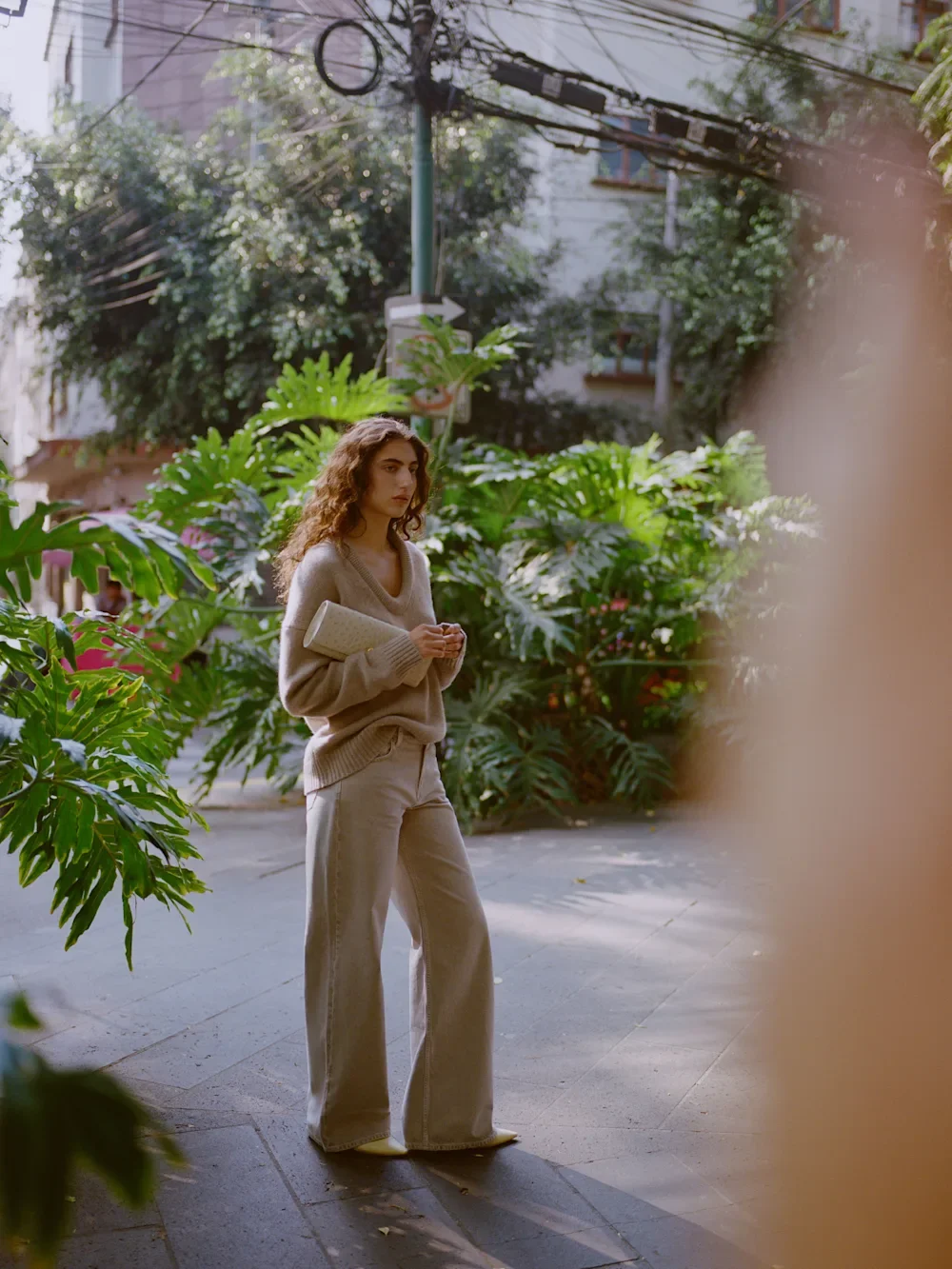
This is where a personal uniform earns its keep. A repeatable set of pieces in one palette removes the daily negotiation and gives you something steadier in return: a signature people recognize before you speak. My own version is narrow on purpose; tailored neutrals, one silhouette, a few pieces that fit exactly. The point is not the specific clothes. The point is that a uniform converts style from a daily performance into a standing decision, so the energy you would spend choosing goes to the work instead.
None of this is about spending more or chasing what is current. A considered wardrobe is usually smaller than a cluttered one. Buy less; tailor what you keep so it fits the body you have now; choose a palette you can get dressed in without thinking. Fit does more than any label, and it reads on camera the way it reads across a table. The founders who look assembled at home are rarely the ones who spent the most. They are the ones who decided what they wear and stopped relitigating it.
There is a quieter argument underneath the practical one. Getting dressed for the empty room is a small act of self-respect, and self-respect compounds. It sets the standard you hold in the hours no client sees, which is the same standard that eventually shows up in the work they do see. Taking yourself seriously in private is not vanity; it is the rehearsal for being taken seriously in public.
So treat the home office as having a dress code, and understand that you are the one who writes it. Not the office you left, not the feed, not the version of remote work that told you comfort and presence were opposites. They are not. You can be comfortable and deliberate at once; the trick is deciding what that looks like on you, and then wearing it on the days no one is watching, so it is already yours on the day someone is.
If you want to name your own signature rather than borrow someone else's, that is worth doing on purpose. Start by noticing what you already reach for on the days you feel most like yourself; the pattern is usually there before you name it.
If you want to name your own signature rather than borrow someone else's, start with the pattern you already have. Take the Style Presence Index; it reads what you reach for on the days you feel most like yourself and names the signature underneath it. The pattern is usually there before you are.