Building a Team Worth Protecting: Dr. Christina Herald on the Decision That Made Her a Leader
Owner, Fall River Vision; Founder, Integrity Eye Care and Offbeat Optom
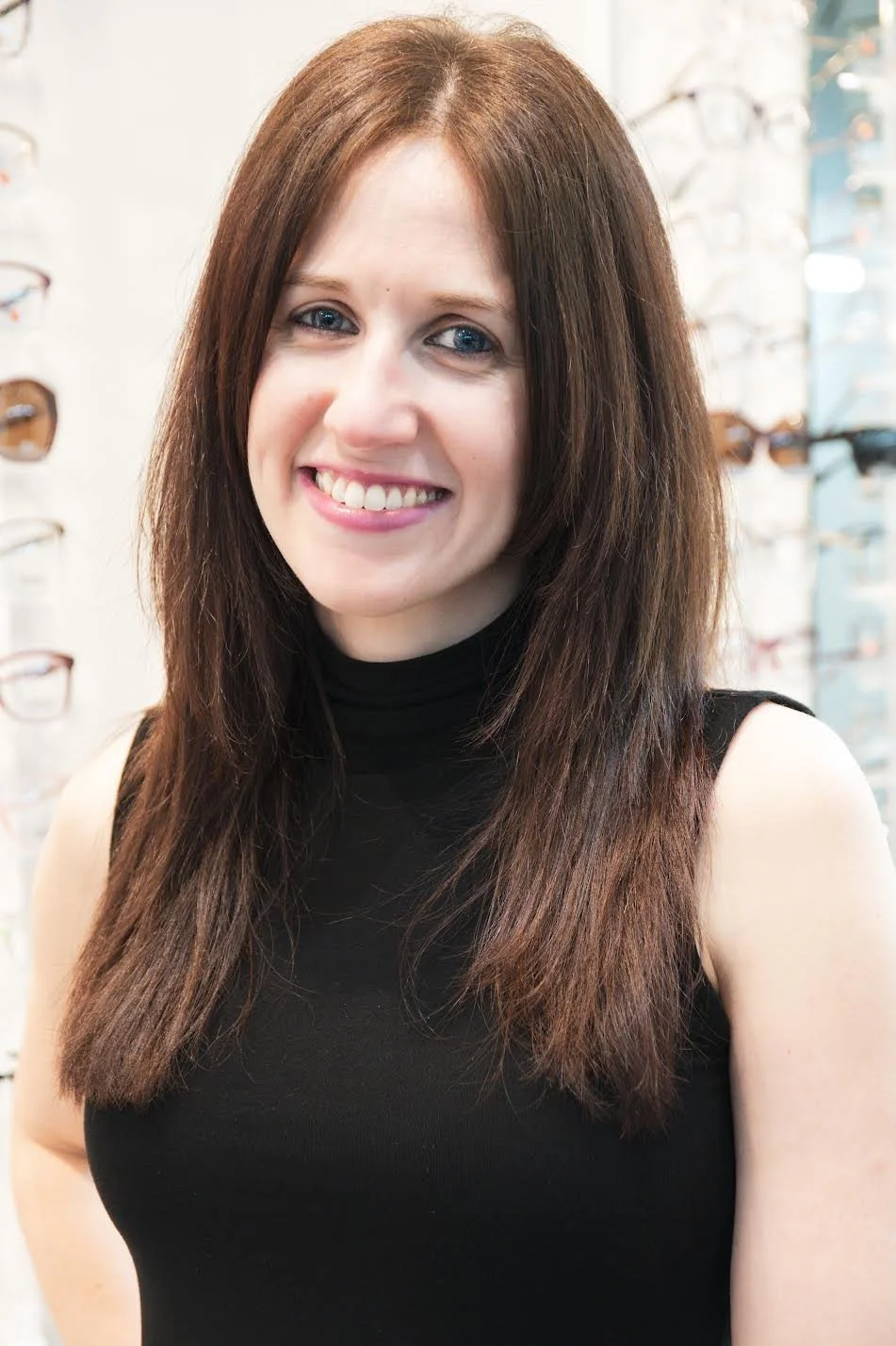
Dr. Christina Herald bought Fall River Vision in July 2022. Months later, before she had even met the patients she had just acquired, a fire tore through the building. She rebuilt. But when she talks about the moment that changed her as a business owner, the fire isn't it. She spoke with FemFounder about the decision that was, and what it taught her about leadership, hiring, and running a practice where every call is hers to make.
You bought Fall River Vision, and the office burned before you could introduce yourself to the patients you had just acquired. You say that wasn't your defining moment. Why was a personnel decision harder than losing the building?
Losing our location was incredibly stressful because it felt like my dream was over before it even had a chance to start. After years of running my mobile practice, I finally bought Fall River Vision. I closed on the practice just after the Fourth of July 2022, and right before Thanksgiving, there was a fire in one of the neighboring units in our strip mall. The fire damaged the utilities for the entire building, so we had no electricity, no heat, and no lights.
The office was long and narrow, with windows only in the front, so the back of the office was almost completely dark. I remember going in with a headlamp on in the middle of the winter. I could see my breath, my fingers felt like they were going to fall off, and I spent hours thumbing through thousands of paper charts several times a week trying to pull the records of patients who wanted to transfer their care elsewhere. I never even got the chance to meet them. That was heartbreaking.
But even with all of that, letting go of my first team member was exponentially harder. The biggest difference was that I never felt responsible for the fire. It was a terrible thing that happened, but it happened to me. I didn't cause it, and there was nothing I could have done differently.
Letting someone go felt completely different because I believed one of my biggest responsibilities as a business owner was building the right team. I felt like if I couldn't coach, train, encourage, and motivate someone to succeed, then I wasn't doing my job well.
I kept giving it more time because I thought maybe I just hadn't figured out how to lead them yet. I kept second-guessing myself. I wondered if I was expecting too much, being too picky, or not being supportive enough. Looking back, I think I was gaslighting myself into believing that if I just tried a little harder, things would somehow get better.
I was also terrified of what would happen if I let this person go. We're a very small office, and I didn't want everyone else to be short-staffed. I had amazing team members, and I didn't know if they would quit because they were friends with this person. I also didn't know if the practice would survive because this team member knew things that I didn't. They felt completely irreplaceable. When I finally made the decision, I spent nights and weekends teaching myself everything they did just so I could keep the office running.
Looking back, that experience completely changed how I think about leadership. I realized that it isn't my responsibility to make someone meet my expectations. My responsibility is to set clear expectations, provide the training and support they need, and make sure they understand what's expected of them. Whether they rise to that standard is ultimately their responsibility.
I also realized that having reasonable standards isn't unfair; it's one of the best ways you can show respect for the rest of your team. Protecting the culture isn't about one person. It's about protecting the people who show up every day and do the right thing. The fire tested whether I could survive something outside my control. Letting someone go tested whether I was willing to make a difficult decision about something that was inside my control. That was the moment that really changed me.
You knew letting that team member go was the right call, and you waited. Walk me through what that period actually looked like day to day.
The hardest part wasn't the decision itself. It was convincing myself that I wasn't failing as a leader.
For a long time, I kept thinking, maybe this is my fault. Maybe I'm not communicating well enough. Maybe if we have one more conversation, things will get better. I also knew how difficult the hiring market was, especially for someone with experience in such a specialized role. It felt irresponsible to let someone go without a replacement.
What made it even harder was that I was a brand-new practice owner. I didn't have a mentor or anyone telling me how to handle situations like this. The role was essential to the practice, and nobody else knew how to do it. I realized I was eventually going to have to take it over myself, so I tried to learn as much as I could before making the change.
The first month after the transition was brutal. My days started around 5:00 a.m. so I could prep everything before patients arrived. I worked until around 10:00 p.m. most nights, and I even canceled patient appointments so I could meet with a consultant I hired just to teach me the role. Every spare minute I had was spent learning. When the office was closed, I was studying. My evenings and weekends disappeared. A lot of my sleep disappeared too.
People sometimes ask why I didn't just hire someone else. The reality is that I couldn't. There was no one in the market who was available, and it was such a specialized position that I didn't have the knowledge to train someone because I was still trying to learn it myself. Before I could teach anyone else, I had to become competent enough to do the job myself. It took about six months before things finally started to stabilize.
Along the way, we hired several people who ultimately weren't the right fit. Some weren't capable of doing the work. Some weren't dependable. Some simply weren't a good match for our culture. Every hiring decision taught me something about what I was really looking for. Ironically, one of the best hires I've ever made had no experience in the field at all. She was curious, motivated, intelligent, and eager to learn. That experience completely changed the way I think about hiring and what I am looking for. Looking back, I wasn't just rebuilding a team. I was rebuilding myself as a leader.
You've said the work environment was part of what you had to fix. What did that teach you?
Out of respect for the people involved, I don't think it's appropriate to discuss the specifics of any individual team member or situation.
What I can say is that I learned one of the hardest lessons of my career. I always knew I wanted to create a psychologically healthy work environment. My dream was to build a practice where everyone wanted to work. What I learned, though, is that building a great team doesn't mean trying to be the perfect workplace for everyone. It means being intentional about who you hire and understanding that protecting your team doesn't mean protecting every individual at all costs. It means defining the values of the practice and protecting the people who live those values.
Early, I realized that members of the team weren't always comfortable speaking openly about workplace concerns. I always tried to foster open communication. I regularly asked if everyone was happy, if they felt supported, and if there was anything I could do better, and I met with them individually frequently. But no matter how approachable I tried to be, you can't out-love a power dynamic. Sometimes people simply aren't comfortable sharing everything with the owner.
There were also times when people confided in me but asked me not to do anything with the information. That was incredibly difficult because I wanted to solve the problem, but if someone asks you to keep something in confidence, it limits your ability to address it. At the same time, everyone deserves to be treated fairly, and I wasn't willing to make decisions based on hearsay. I had to rely on what I could observe firsthand.
Looking back, I also realized I was placing too much value on technical ability. I kept telling myself that because someone was exceptionally good at their job, we could work through the interpersonal challenges. Eventually, I understood that protecting one high performer was coming at the expense of the rest of the team. That wasn't the culture I wanted to build.
The experience also taught me not to let critical knowledge rest with one person. We now cross-train team members, document our processes, and have systems in place so the practice can continue to function smoothly regardless of staffing changes. In a small optometry practice, that's especially important because doctors are trained to care for patients, not necessarily to manage every aspect of insurance, optical, and business operations. No one should ever become indispensable simply because they're the only one who knows how something works.
Today, my expectations are very clear. Technical skills can be taught, but kindness, professionalism, and respect for your coworkers are non-negotiable. If I learned anything from that experience, it's that protecting the culture of the team is every bit as important as protecting the business itself.
The standard advice is hire slow and fire fast. At your size that advice doesn't hold; there's no bench, and every departure lands on you. What does the coverage of small business leadership consistently get wrong about practices your size?
I actually love this question because so much business advice is written for companies that already have layers of management or enough people to absorb a loss. That's just not reality for a practice with two to five team members. One of the most common pieces of advice is, "Delegate." And I agree with that in principle. But what happens when you're starting from scratch and there's nobody to delegate to? Or when your best team members are already stretched thin because the practice is busier than it can handle? At that point, delegating more work to them is a recipe for burnout and people quitting.
Another piece of advice I hear all the time is that the owner or doctor should never answer the phone or work the front desk because it's too expensive to pay a doctor-level salary for entry-level work. I actually think that's one of the biggest misconceptions for a business our size. Yes, ideally, I'd spend every minute seeing patients while someone else handled everything else. But periodically stepping into those roles has made me a better leader. When you're answering the phones, checking patients in, or working in optical, you experience the friction in your systems firsthand. You notice bottlenecks that no report or KPI will ever show you. I remember asking my team one day why nobody had mentioned that one of the computers was painfully slow. They looked at me and said, "We just thought that's how it was."
That was a huge lesson for me. They weren't hiding anything. They just didn't realize it was fixable. Team members don't always think about the value of time or operational efficiency the same way an owner does. Sometimes they don't want to bother you. Sometimes they assume something is normal because it's always been that way. If I had stayed in my office all day because a business book told me to, I never would have found that problem.
The other thing that gets overlooked is the emotional side of leading a very small team. In a large company, leadership can sometimes feel distant. In a practice like mine, people need to know you're willing to jump in when things get hard, because if you show loyalty, your team will be loyal to you.
I never want my team to feel like they're drowning while I'm sitting in my office saying, "That's not my job." They need to know I'm willing to answer the phones, clean a room, adjust glasses, or do whatever needs to be done to get through the day.
Ironically, I think that makes delegation easier in the long run, because your team trusts that you're asking them to do difficult things only after you've been willing to do them yourself. For very small businesses, I think the goal isn't to avoid working in the business. It's to understand every part of it well enough that you can improve it, support your team, and gradually build systems that eventually let you step away. That's a very different journey than the one most business books describe, but it depends on the goals and values of the owner.
You said you're one great hire away from the right team, and that you've since streamlined your hiring process. What changed in how you hire, and what are you looking for now that you weren't looking for three years ago?
Three years ago, I was looking for anyone who seemed nice and who I thought would be good with patients. I had never had team members before, so I was honestly just grateful that anyone wanted to work for me. Starting a practice is overwhelming, and at that stage I think I confused being appreciative of applicants with lowering the bar for hiring.
Over time, I realized that in a two-to-five-person business, personality alone isn't enough. Every single person has an outsized impact on the culture and the day-to-day operations, so you have to be much more intentional about who joins the team.
I also learned that there are certain qualities that matter much more in a small business than they might in a larger organization. We need people who can multitask, take initiative, and are willing to jump in wherever they're needed. I had some early team members who only wanted to do their specific job. That simply doesn't work in a microbusiness. Everyone has to be willing to help wherever the bottleneck is that day.
One concept that really resonated with me came from Traction by Gino Wickman: people must like the work, want the work, and have the capacity to do the work. That framework has helped me evaluate candidates. I'm looking for people who genuinely care about serving patients, enjoy working in a fast-paced environment, and can think independently without needing constant direction. I don't have an office manager, so when I'm seeing patients, I need people who can solve small problems on their own instead of stopping every few minutes to ask what they should do next.
Our hiring process has evolved just as much as what we're looking for. Early on, if someone submitted a résumé, I would usually interview them, and if the interview went well, I'd hire them. Today, the process is much more layered.
Candidates start with an application, followed by a 20-minute phone screening where we discuss the role and make sure they can communicate well and understand the expectations. If that goes well, they're invited to complete an unpaid job shadow where they observe the practice, meet the team, and see what the job is actually like. Interestingly, my team often learns things during these conversations that I wouldn't have discovered in a traditional interview, and that step alone has helped us avoid several bad hires.
During the shadow, candidates also complete a work-style questionnaire. It has very little to do with optometry. Instead, it looks at how they approach problems. For example, one question asks what they would do if they were a server in a restaurant and noticed a table wobbling. Would they immediately get a manager, move the guests to another table, or simply fix the table themselves? There isn't always one perfect answer, but we're trying to understand whether someone naturally takes ownership and solves problems or immediately escalates every minor issue.
After the shadow, we debrief with the team, discuss how everyone felt about the fit, and then check three references before making any offer. We also make our expectations very clear from the beginning: everyone will be cross-trained, everyone is expected to help wherever the practice needs them, and reliability is essential. In a larger organization, it's perfectly reasonable for someone to stay within one defined role. In a practice our size, that's simply not realistic.
About Dr. Christina Herald
Dr. Christina Herald is an optometrist, entrepreneur, and healthcare innovator dedicated to improving both the business and human side of medicine. She is the owner of Fall River Vision, an independent medical eye care practice in Massachusetts, where she has led the practice through a complete operational transformation, including rebuilding the business after a catastrophic office fire.
Dr. Herald has founded multiple healthcare ventures focused on expanding access to care, improving practice operations, and helping patients better understand the healthcare system. She is the founder of Integrity Eye Care, a mobile eye care practice serving individuals who cannot access traditional office-based eye care, where she managed multi-state clinical operations. She is also the founder of Offbeat Optom, an educational platform exploring healthcare leadership, entrepreneurship, and patient advocacy.
Known for combining strategic thinking with genuine compassion, Dr. Herald has built a reputation for creating systems that improve both the patient experience and business performance. She was the runner-up in the 2024 Rockland Trust Small Business Big Dreams Contest and a finalist in the 2025 South Coast Community Choice Awards. She mentors entrepreneurs through the EforAll Entrepreneurship Program, has been featured in Women in Optometry and All About Vision, and frequently speaks on leadership, healthcare innovation, and private practice ownership.
Dr. Herald earned her Doctor of Optometry degree from the New England College of Optometry and holds the highest level of optometric licensure available in Massachusetts. She serves on the Membership Committee for the Massachusetts Society of Optometrists and is a graduate of the American Optometric Association Leadership Institute.
Dr. Herald lives in southeastern Massachusetts with her high school sweetheart and their two rescue dogs. A former competitive roller derby skater, she brings that same resilience, grit, and willingness to challenge the status quo to every venture she pursues. Whether she is treating patients, building businesses, or creating educational content, her mission is simple: to help people see healthcare, and entrepreneurship, differently.
This interview is part of the FemFounder founder interview series. Interviews are edited for length and clarity.
FemFounder is edited by Kristin Marquet, founder of One Quiet Morning, a PR and brand studio for founders.