Refusing to Be the Bottleneck: Yurilka Hernandez on Building a Practice Bigger Than Her Own Hours
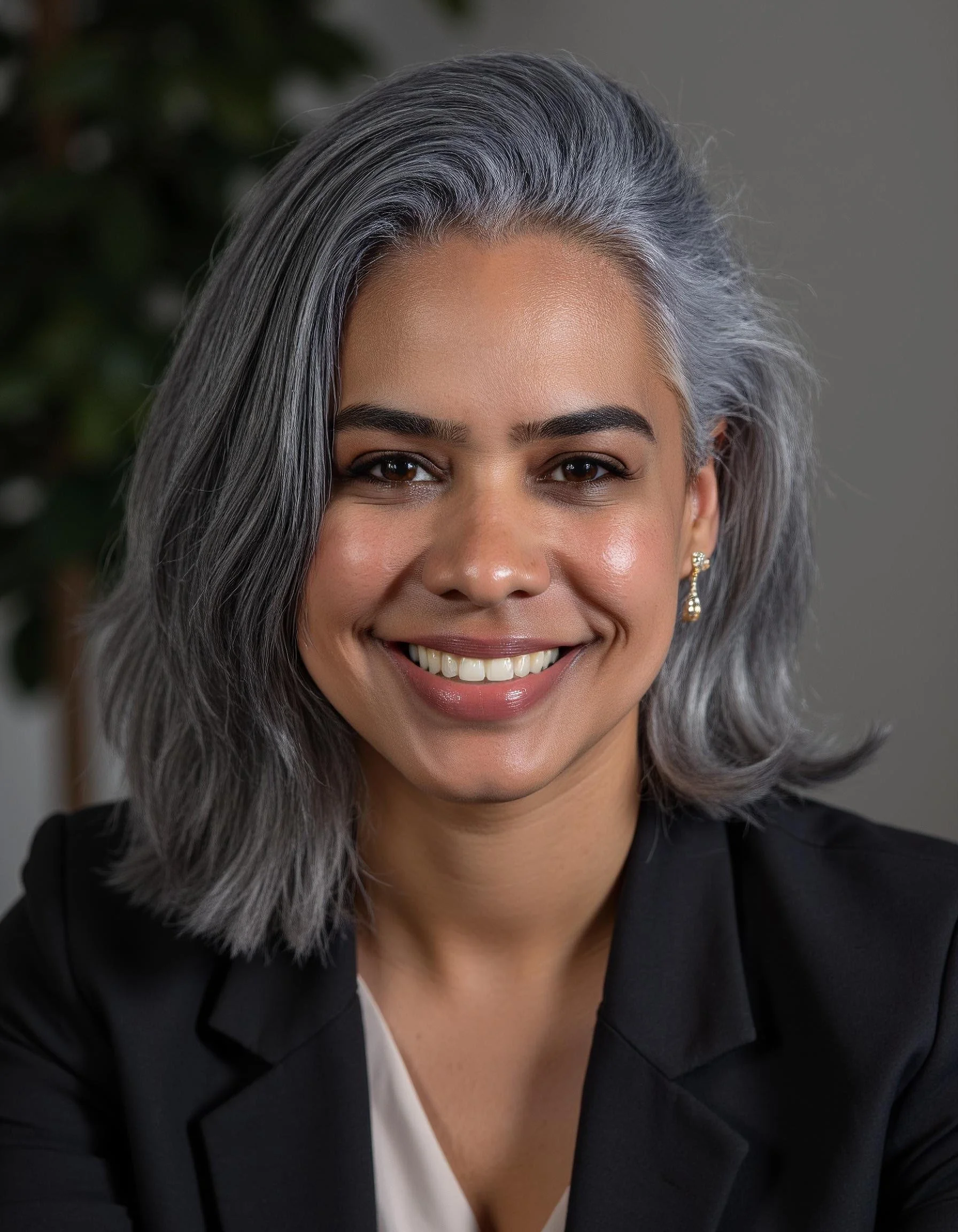
Yurilka A. Hernandez, LCSW, CASAC-T, spent nearly two decades in behavioral health before she hit the ceiling every clinician eventually meets: in a therapy-only practice, growing the business meant seeing more clients herself, and there are only so many hours a person can hold. So she made a decision most therapists never do. She split her work in two, a private practice for the clinical work and a nonprofit for the community work, and stopped pricing her expertise by the hour. She spoke with FemFounder about building past her own capacity, and what it taught her about value, mission, and refusing to be the bottleneck.
Before you repositioned, what told you the therapy-only model had a ceiling?
The ceiling became visible when I realized that increasing revenue in a therapy-only model required increasing the number of clinical hours I personally delivered. Once my caseload reached approximately 25 sessions per week, the practice was financially active, but I was approaching the limit of my personal capacity. There are only so many sessions a clinician can conduct responsibly each week while remaining fully present. Insurance reimbursement rates also placed an external limit on what each hour could generate. Adding more appointments would have meant building a business around the same conditions of overwork and burnout that I was increasingly being asked to help other clinicians address.
At the same time, organizations and professionals were approaching me for services that did not fit neatly into an individual therapy session. They wanted staff training, support responding to burnout, culturally responsive program development, leadership guidance, community workshops, and consultation on engaging bilingual and immigrant families. I kept receiving variations of the same request: “Can you help our whole team with this?” Those conversations showed me that people were not only seeking my clinical labor. They were seeking the expertise I had developed across more than 18 years in behavioral health, organizational leadership, family therapy, and community-based services.
The turning point came in 2025, after I received several requests to provide workshops and speaking engagements on clinician burnout, leadership, and culturally responsive care. I realized that I was repeatedly being asked to bring my knowledge into rooms larger than the therapy room, yet I was either turning down those opportunities or providing the work informally. The demand was not for more therapy appointments; it was for a different application of my expertise. The answer was not to add every requested service to the practice. It was to narrow the clinical work around what we did particularly well and create a separate structure for the organizational and community-level work.
You split the work between a PLLC and a nonprofit. What was the test you used to decide where something belonged, and what was the hardest thing to put on the side you did not want it on?
The test became: Who benefits, who pays, and what is the primary purpose of the service? If the service involved psychotherapy, clinical treatment, or consultation for a paying individual or organization, it generally belonged within Psychotherapy & Consultation Group Services PLLC. If its primary purpose was expanding community access, providing free or subsidized education, supporting underserved families, developing the behavioral health workforce, or addressing a systemic gap that could not be sustained through fees alone, it belonged within Alta Vida Wellness, the nonprofit.
That distinction sounds clean now, but it was emotionally difficult. Mental health work does not naturally divide itself into charitable and commercial categories. A free community workshop can lead someone to treatment. An organizational training can improve the conditions under which clinicians serve marginalized communities. A paying contract can generate knowledge that later benefits a community program. I had to accept that the two entities could share a mission without sharing the same financial structure or purpose.
The hardest work to place within the nonprofit was the work closest to my heart: free mental health education, provider-support programming, bilingual community outreach, and services for families facing barriers to traditional care. I wanted to begin delivering all of it immediately. However, placing those services within the PLLC would have meant personally subsidizing them indefinitely through my clinical hours. Building Alta Vida Wellness required me to slow down, establish governance, recruit a board, develop partnerships, and create the infrastructure needed to sustain the work beyond my generosity or availability. That delay was difficult, but it was also the more responsible decision.
Selling clinical hours and selling organizational expertise are different businesses with different buyers. What did you have to unlearn, what did you get wrong first, and how did your pricing change once you stopped charging for time?
I had to unlearn the belief that value should be calculated primarily by the hour. Clinical practice trains us to think in units: one session, one client, and one reimbursement rate. Organizational work is different. An organization is not simply purchasing the hour I spend presenting. It is purchasing the assessment, years of experience, cultural knowledge, customization, preparation, intellectual property, facilitation, and recommendations that make that hour useful. It may also be purchasing an intervention that affects an entire team or changes how services are delivered to hundreds of families.
My early mistake was pricing organizational work too much like therapy. I focused on the visible time, such as a 90-minute workshop, without fully accounting for the discovery meeting, research, customization, materials, travel, follow-up, and the value of addressing a costly organizational problem. I also sometimes provided too much strategy during introductory conversations because helping came naturally to me. I had to learn that an initial consultation can establish fit without giving away the intervention itself.
Early on, I might have charged $150 to $250 for a presentation because I was calculating only the time spent in the room. Today, a defined workshop may range from $350 to $750, depending on the audience, preparation, customization, materials, travel, and follow-up. A broader organizational engagement involving assessment, program development, curriculum design, facilitation, and recommendations is priced separately according to its complete scope. I no longer treat a complex organizational problem as though the organization is purchasing an extended therapy session. The shift was not simply about charging more; it was about becoming more accurate about what the client was buying.
What has been hardest about getting this work in front of the organizations that need it? Bilingual, culturally responsive consulting is not a category most institutional buyers know how to shop for.
The hardest part has been translating an integrated form of expertise into language institutional buyers already recognize. Organizations may have separate budget categories for employee wellness, leadership development, diversity and inclusion, community engagement, clinical consultation, or workforce retention. My work often sits at the intersection of all of them. Bilingual and culturally responsive consulting is not simply translation, and it is not a decorative addition to an existing program. It affects how leaders build trust, how employees experience the workplace, how organizations engage families, and whether community members use the services being offered.
The people who understand the need are not always the people authorized to purchase the solution. A program director may recognize that staff members are burning out or that families are not engaging, while procurement is searching for a standard “training vendor.” Institutional systems often require the work to fit a familiar category before decision-makers can fund it. Part of my work has therefore become helping organizations name the problem more accurately. Empty program seats may be treated as a marketing problem when they reflect failures in trust, accessibility, language, outreach, or program design. Staff turnover may be treated as an individual resilience problem when workload, leadership practices, insufficient resources, and a lack of psychological safety are driving it.
I have also had to become more visible beyond traditional behavioral health networks. Relationships, conference presentations, capability statements, partnerships, and concrete examples help buyers understand that culturally responsive work produces operational outcomes, not only good intentions. The ongoing challenge is describing cultural responsiveness as a core business and service-delivery competency without allowing institutions to reduce it to a single workshop or diversity initiative.
You are building programs and partnerships meant to run beyond your own capacity. What does that look like twelve months out, and what has to be true for it to work?
Twelve months from now, I want the work to be less dependent on whether I personally have another hour available. For the PLLC, that means having clearly defined organizational offerings, standardized assessment and training processes, stronger contracting relationships, and qualified clinicians or consultants who can deliver services consistently. For Alta Vida Wellness, it means having an active governing board, sustainable community partnerships, a recurring program calendar, and funding that supports bilingual mental health education, clinician well-being initiatives, community workshops, and services for people who face barriers to traditional care.
I am also developing the Alta Vida Leadership Framework, which focuses on clinician well-being, organizational conditions, and workforce sustainability. The goal is to help behavioral health organizations move away from treating burnout as an individual failure and instead examine the conditions producing it: workload, available resources, leadership behavior, organizational support, psychological safety, and cultural responsiveness. For the framework to operate beyond me, it must be teachable, documented, measurable, and adaptable without losing the values at its core.
Three things must be true for this expansion to work. First, the infrastructure must grow at the same pace as the vision. Governance, contracts, quality standards, financial controls, and outcome measurement cannot be afterthoughts. Second, the people delivering the work must understand both the technical model and the communities it is intended to serve. Third, I must resist rebuilding myself as the bottleneck. My role must continue shifting from personally carrying every service to setting the standard, developing partnerships, building capacity, and protecting the integrity of the mission. Success will not mean that I am doing more of everything. It will mean that the work can reach more people without requiring my constant presence.
About Yurilka A. Hernandez
Yurilka A. Hernandez, LCSW, CASAC-T, is a bilingual behavioral health executive, family therapist, consultant, and founder with more than 18 years of experience in clinical care, organizational leadership, workforce development, and community-based services. She is the founder of Psychotherapy & Consultation Group Services PLLC and Alta Vida Wellness, a nonprofit supporting culturally responsive mental health access, community education, and behavioral health workforce sustainability. Her work focuses on couples and families, trauma, clinician burnout, organizational well-being, leadership development, and engagement with immigrant and historically underserved communities. Hernandez is completing her Doctor of Social Work degree, where her capstone work examines organizational approaches to clinician well-being, workforce sustainability, and collective flourishing.